Seenic
end to end design
Helping users effortlessly find and navigate to lesser-known scenic views, enhancing outdoor experiences and supporting local tourism.
ux / ui design
ux research
figma
photoshop
miro
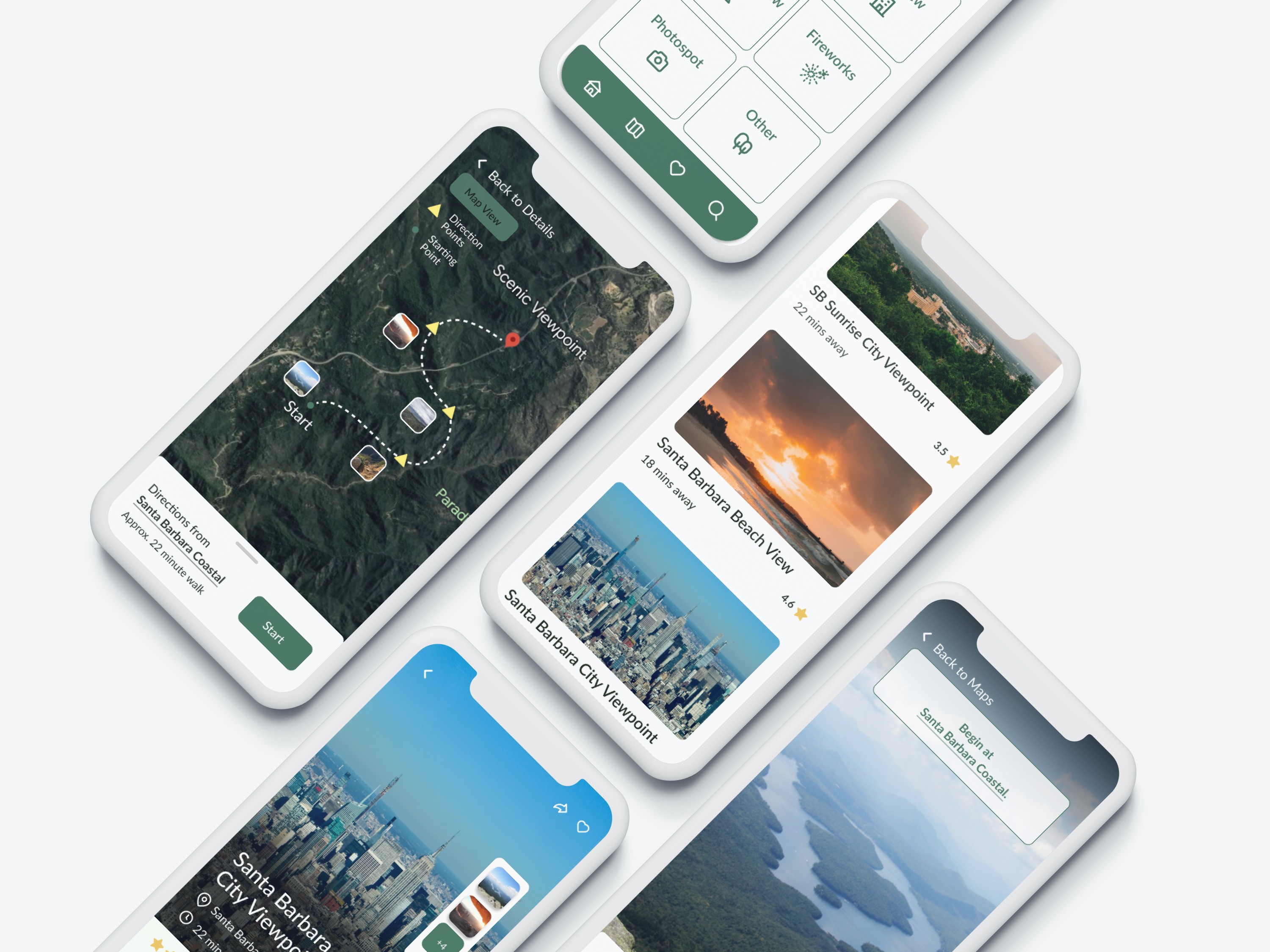
It takes countless of searches, references, and sifting through reviews to navigate to lesser known scenic spots.
According to a recent survey, 65% of outdoor enthusiasts struggle to find reliable information on lesser-known sites. SEENIC aims to tackle this problem.
user insights
Key pain points uncovered through interviews
6 interviews were conducted with users who researched and visited scenic locations within the past year.
Time-consuming Research
5/6 users found that photos were difficult to find and often failed to accurately depict a location.
Unreliable Navigation
5/6 users found that photos were difficult to find and often failed to accurately depict a location.
Disorganized Reviews
5/6 users found that photos were difficult to find and often failed to accurately depict a location.
Inaccurate Visuals
5/6 users found that photos were difficult to find and often failed to accurately depict a location.

user insights
6 interviews were conducted with users who researched and visited scenic locations within the past year.
Time-consuming Research
5/6 users found that photos were difficult to find and often failed to accurately depict a location.
Unreliable Navigation
5/6 users found that photos were difficult to find and often failed to accurately depict a location.
Disorganized Reviews
5/6 users found that photos were difficult to find and often failed to accurately depict a location.
Inaccurate Visuals
5/6 users found that photos were difficult to find and often failed to accurately depict a location.
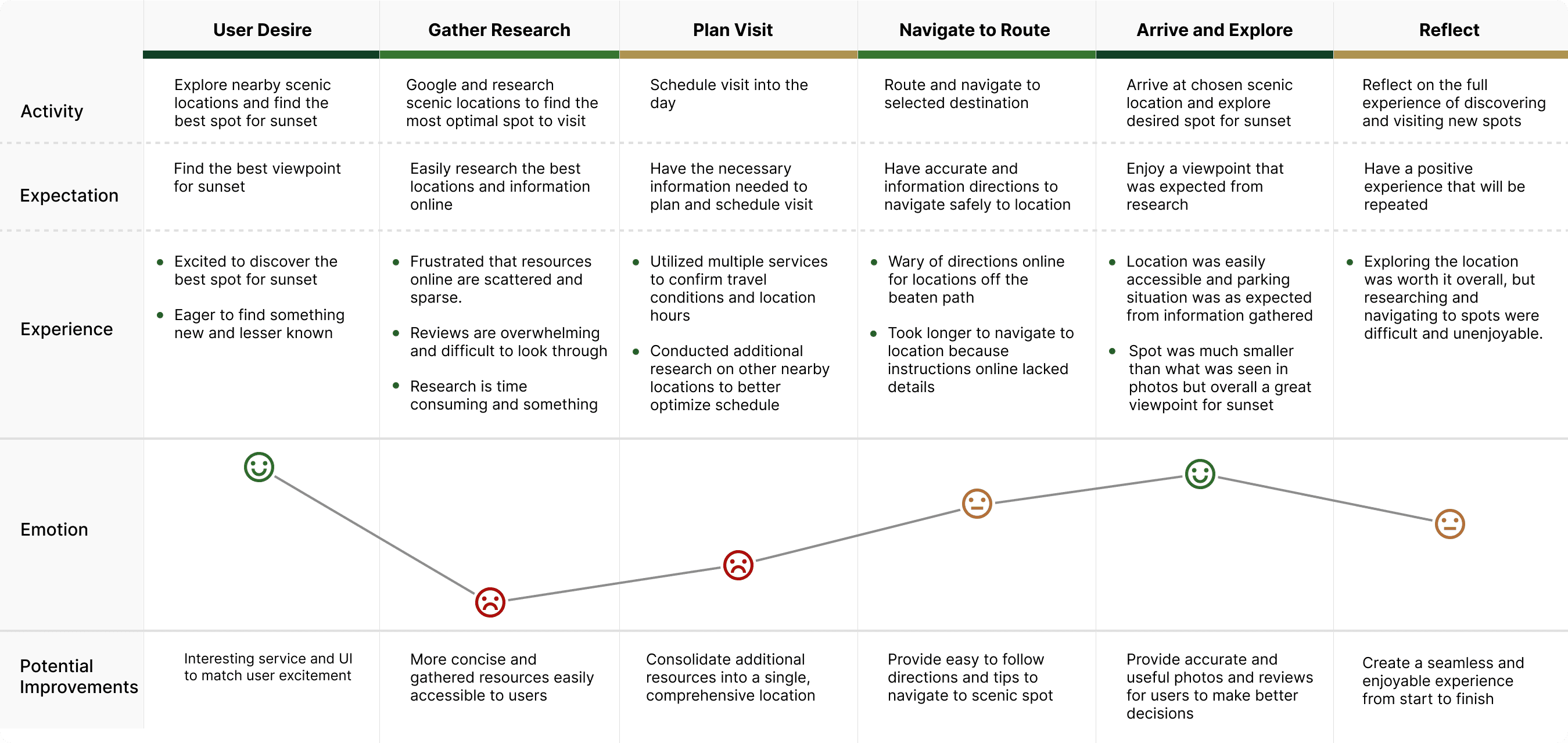
how might we
solution brief
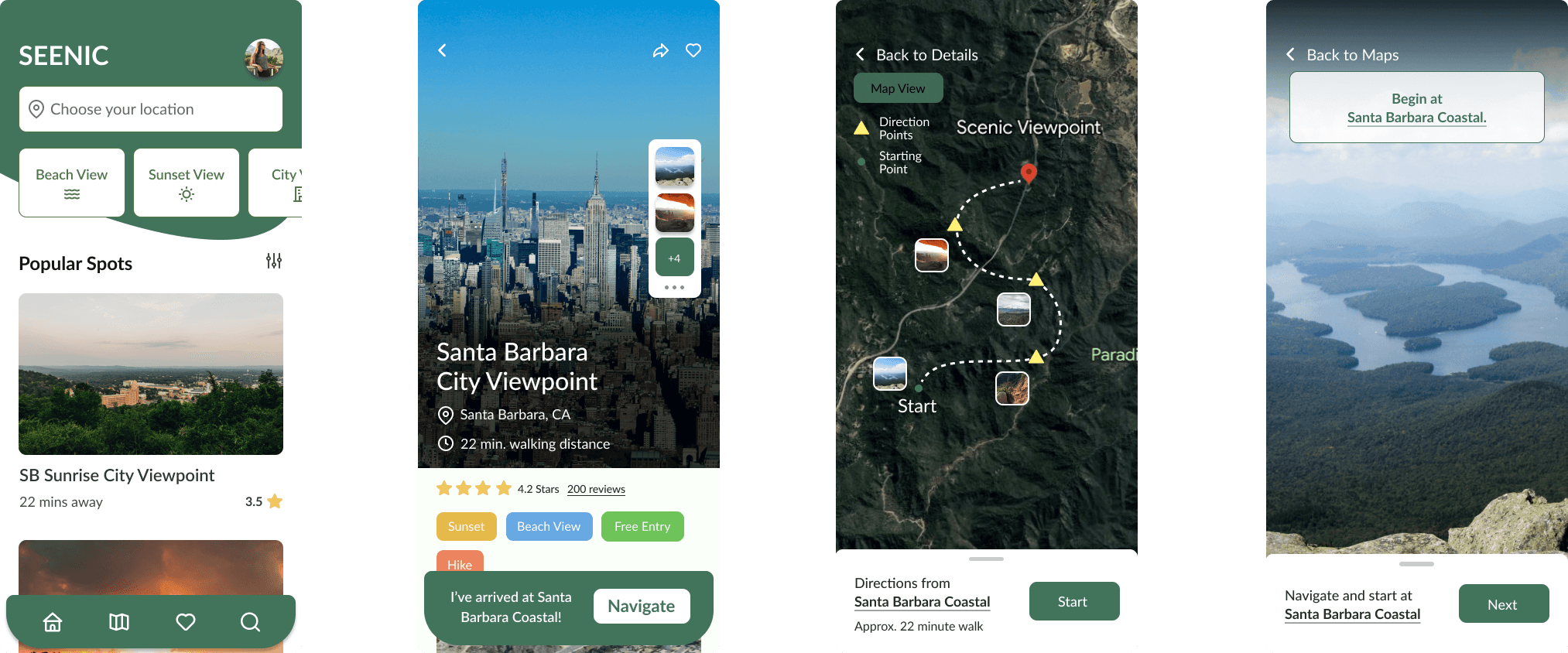
A centralized platform that streamlines the discovery process by consolidating information, user-generated content, and easy navigation features.
market analysis
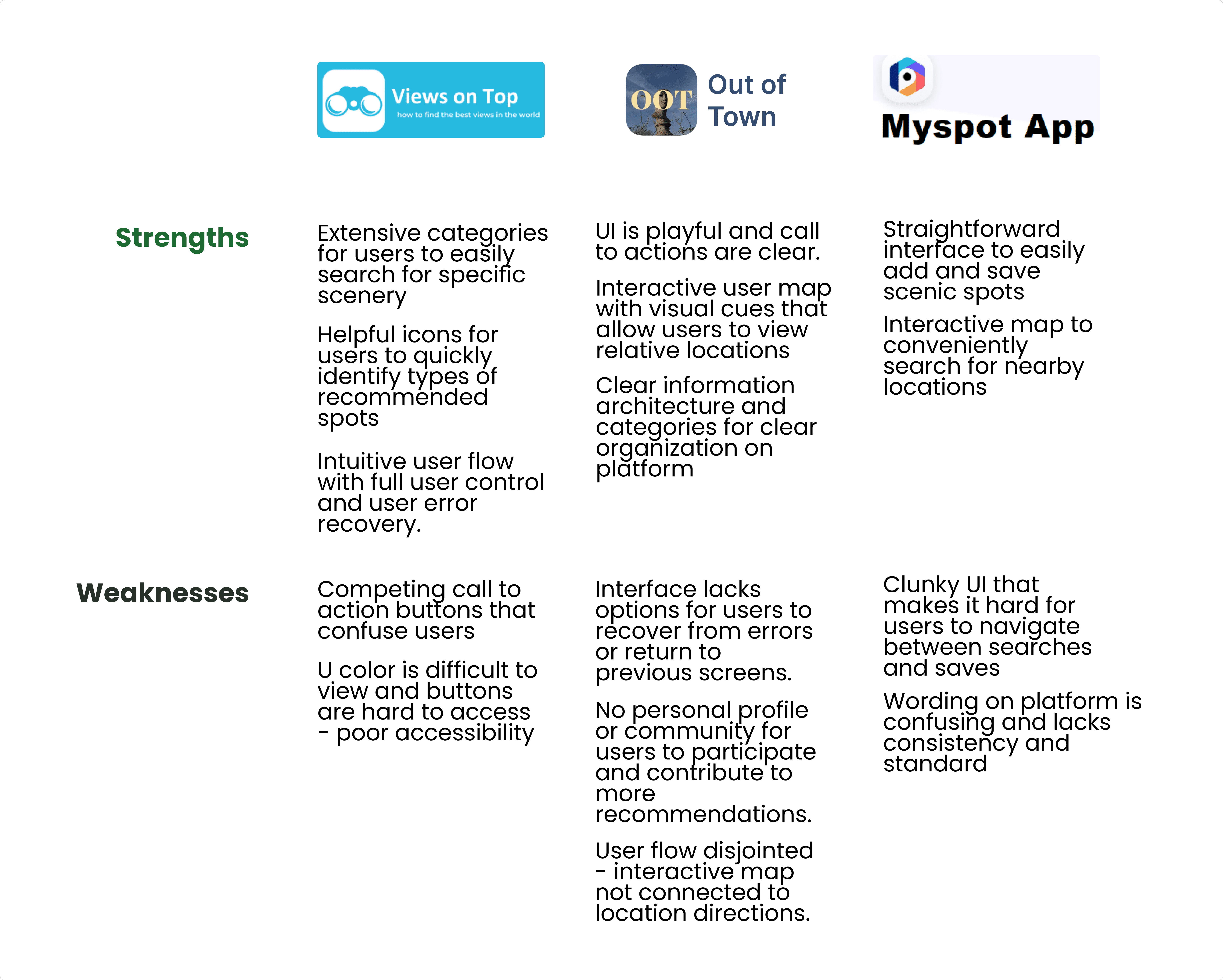
Current market lacked a comprehensive platform to support discovery from start to finish
A thorough analysis revealed significant gaps in existing solutions to consolidate information, highlighting opportunities for user-generated content, visual navigation, and organized reviews.
competitive analysis and feature matrix
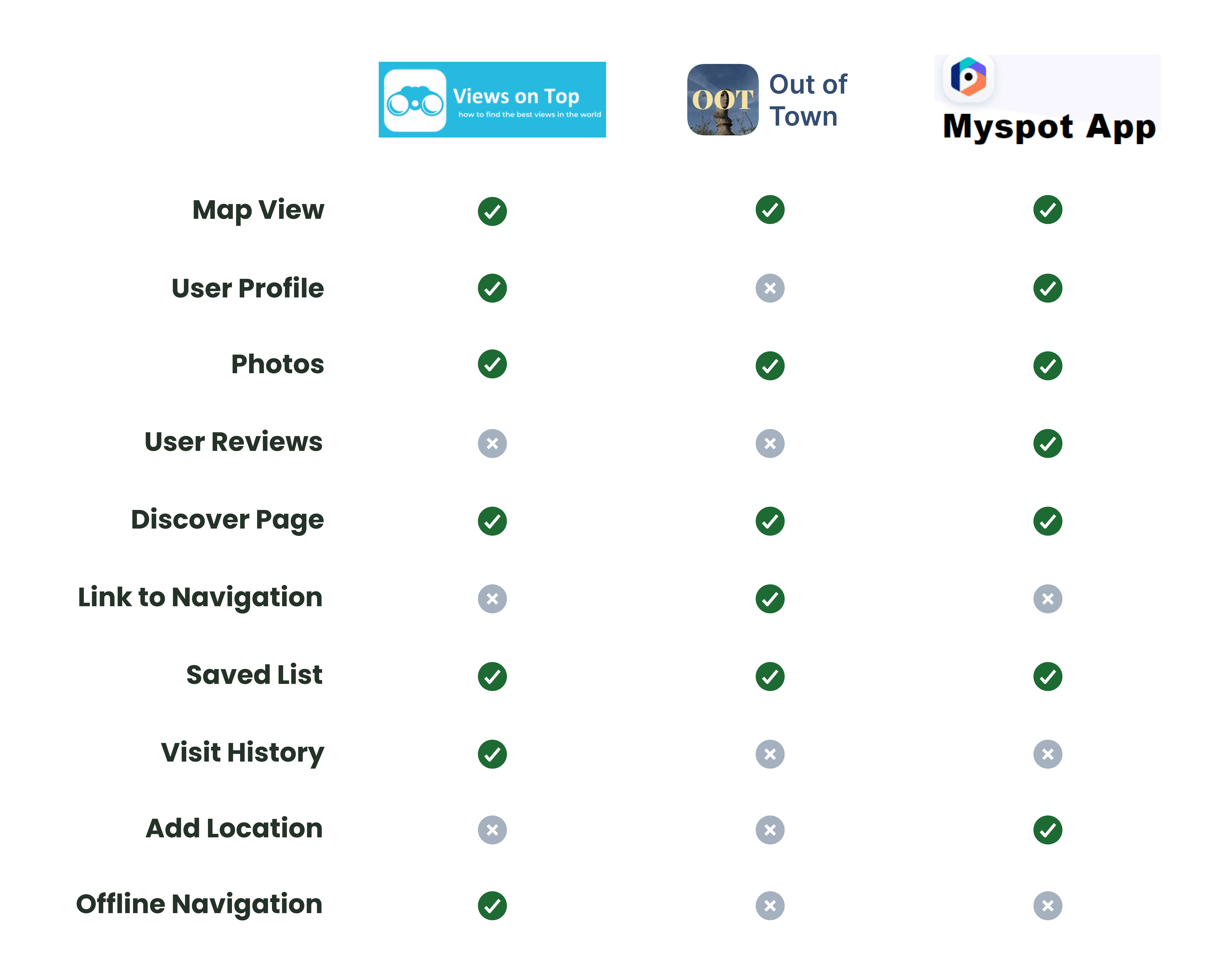
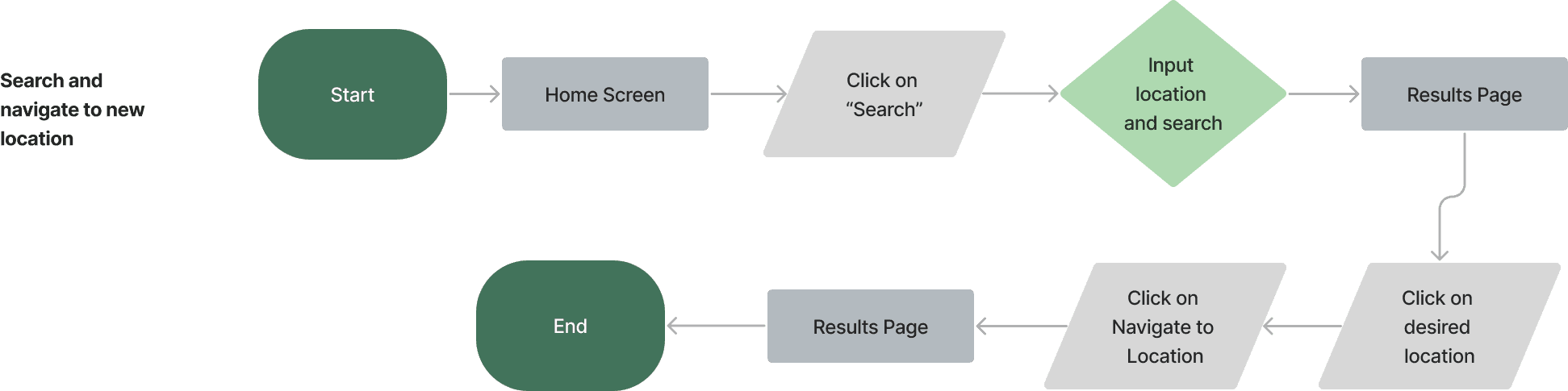
Ideation, flow, and wireframes for design brainstorming
Gleaning in our research and analysis, I prioritized the must-have features of a functioning location service and the essential task flow - to search and arrive at a newly discovered location.
priority matrix
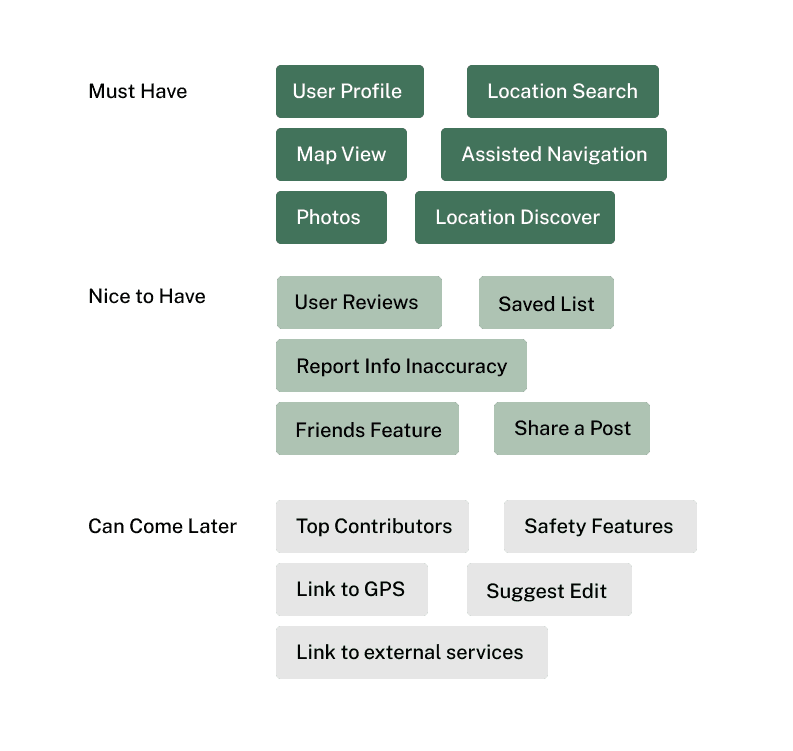
task flow

wireframes
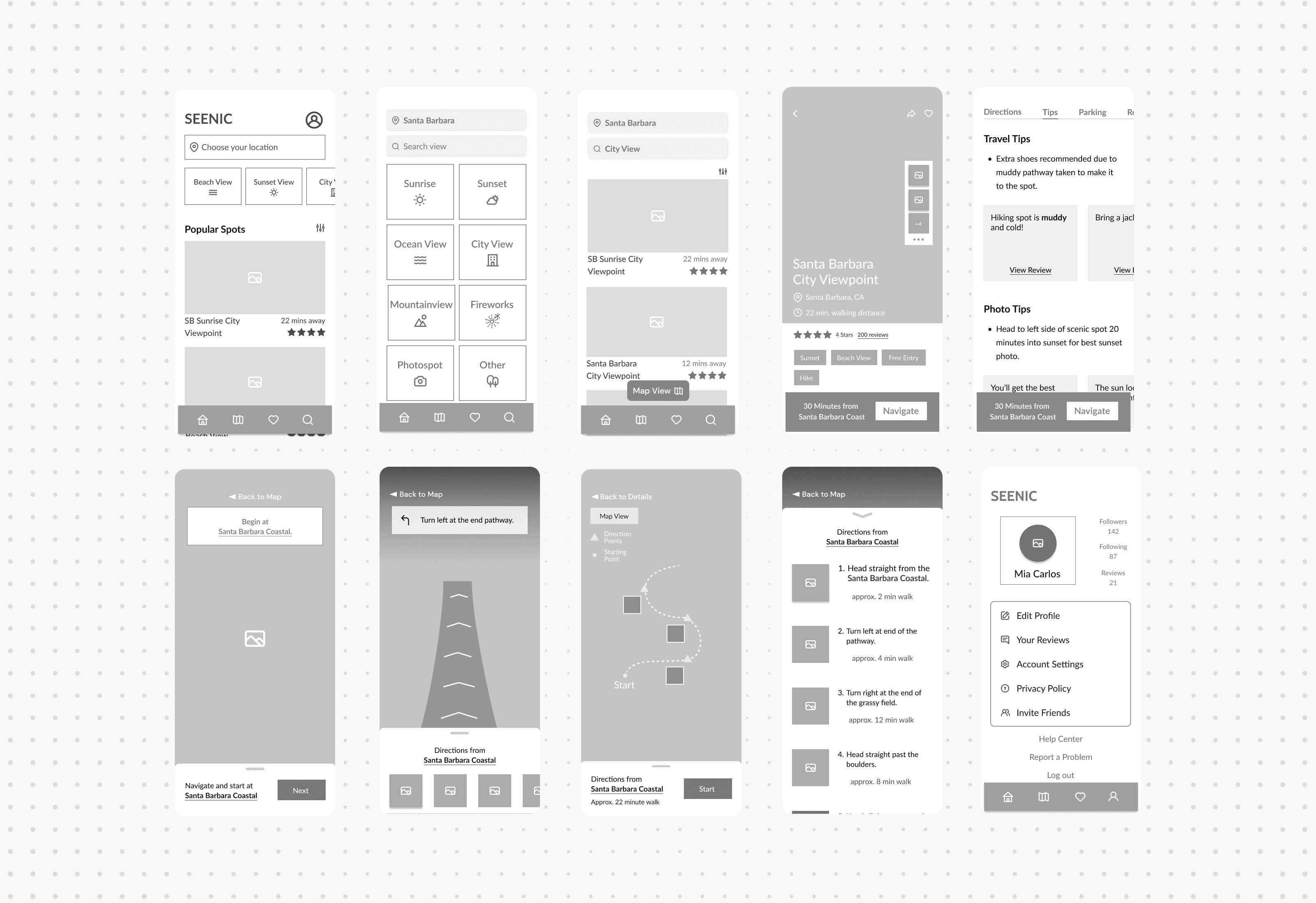
Iterations and additions through user feedback
User testing conducted with 5 users on mid-fidelity prototypes with 100% task flow completion rate.
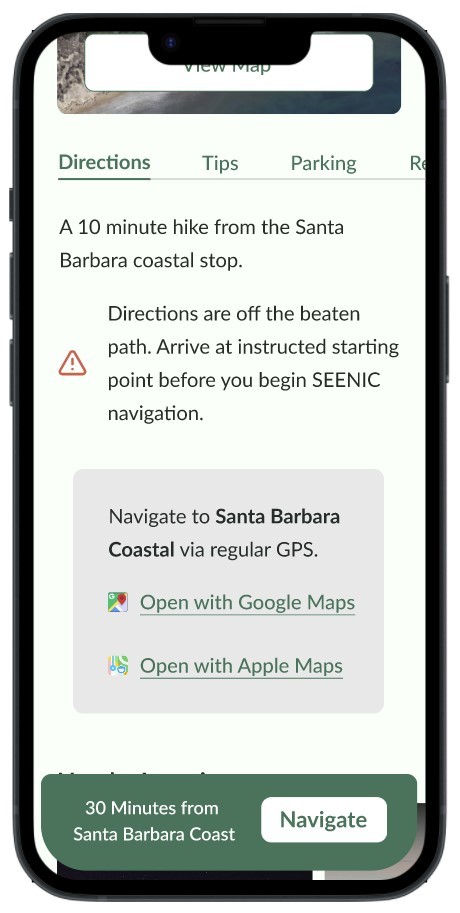
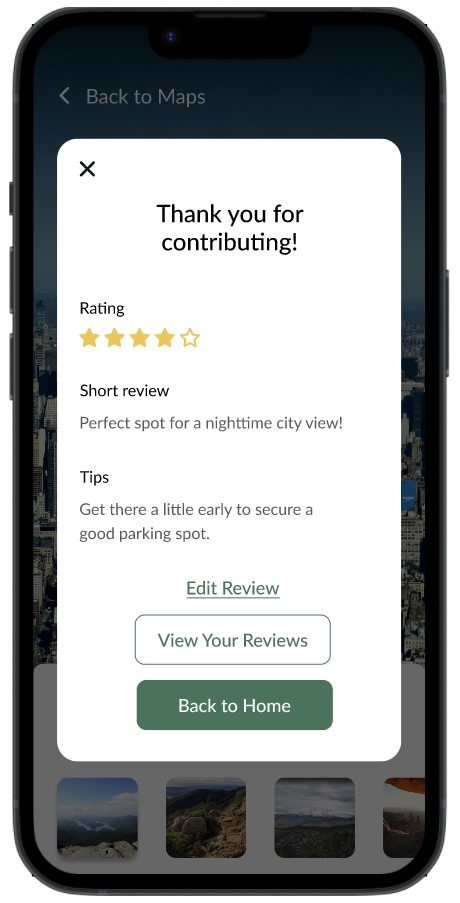
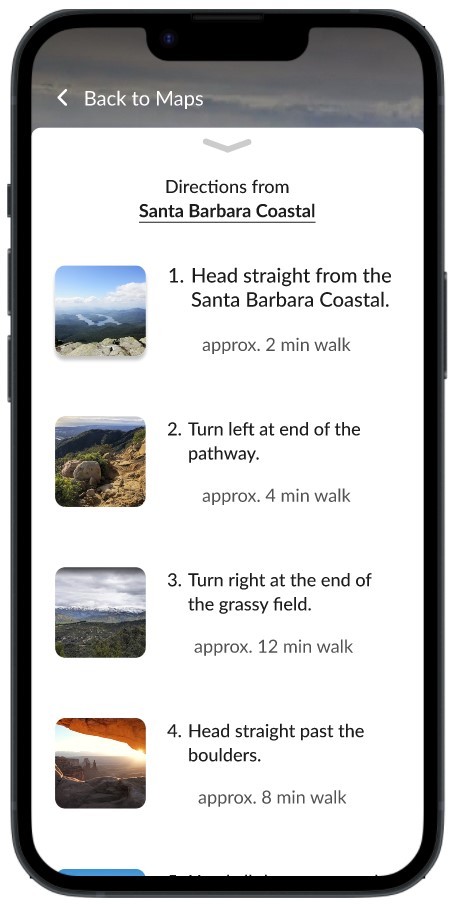
A look at the final Hi-Fidelity Designs
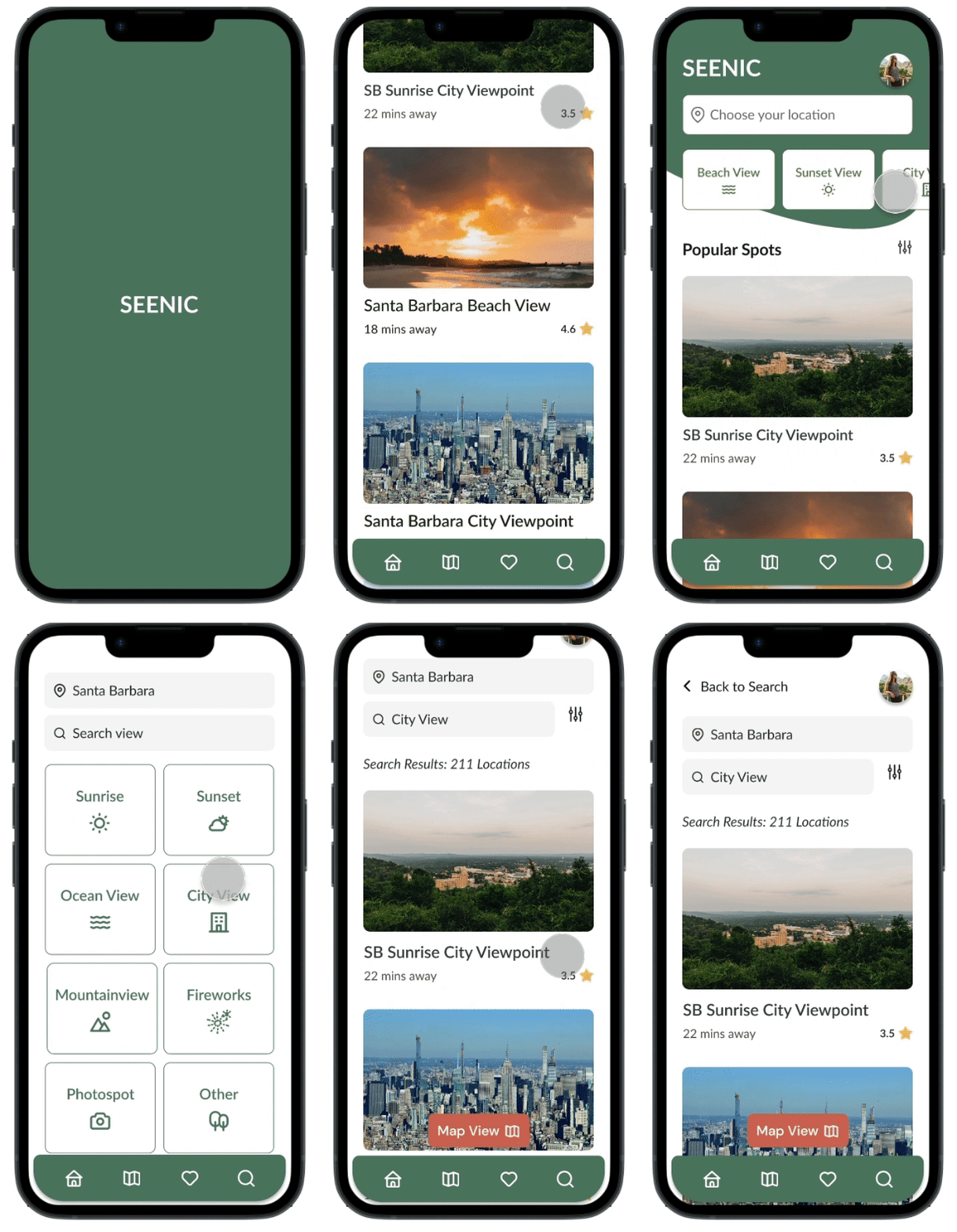
Categories and consolidation allow users to easily search and explore specific scenic locations
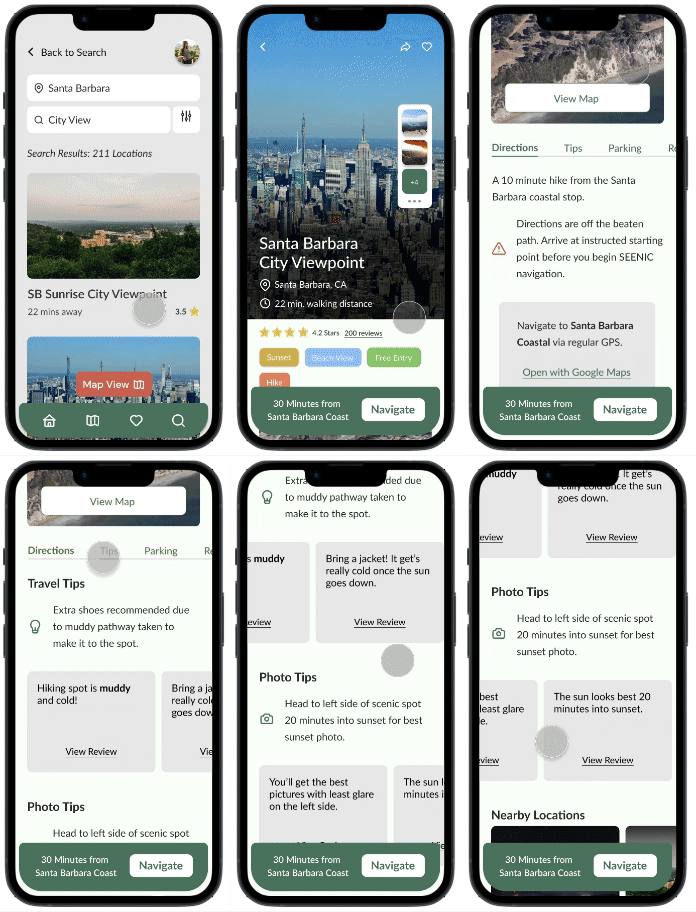
Tips and tricks highlighted under Reviews for easy access
Visual navigation allow users to access directions unavailable through conventional GPS

Process Flow Diagram
This project emphasized the importance of a user-centered design approach. Continuous feedback was essential in shaping the final product. Key lessons learned include:
Documenting design iterations clearly aids future handoffs.
Focusing on understanding user needs through comprehensive research is critical before diving into design.
Roadmap visual
Plans include enhancing community features, integrating advanced navigation technologies, and collaborating with local tourism boards for broader reach. A roadmap for these developments is being created to ensure a structured approach.
Visuals and Quotes Integration
Integrating user quotes throughout the study adds depth and personal connection, enhancing the narrative and engaging the reader.
© 2024 Pamela Hsiung