concept feature design

AI Feature Design

Travel Planning with Meta

Overview

Overview

Travel planning is a $250 billion sector, with a plethora of services and resources attempting to improve the experience. However, planning trips with friends remains fragmented and inefficient due to a lack of centralized communication and collaboration tools.


This project aims to resolve the pain points that users still face while planning travel with others.

Travel planning is a $250 billion sector, with a plethora of services and resources attempting to improve the experience. However, planning trips with friends remains fragmented and inefficient due to a lack of centralized communication and collaboration tools.


This project aims to resolve the pain points that users still face while planning travel with others.

Approach

Approach

UX Research

Interaction Design

UX Research

Interaction Design

Figma, Sketch, InVision, Miro

Adobe XD

Figma, Sketch, InVision, Miro

Adobe XD

Sole Designer

Sole Designer

The Challenge

Group travel planning is inefficient due to fragmented communication across multiple platforms, leading to confusion, miscommunication, and missed opportunities for collaboration.

Group travel planning is inefficient due to fragmented communication across multiple platforms, leading to confusion, miscommunication, and missed opportunities for collaboration.

Fragmentation: Existing travel planning apps operate in isolated ecosystems, requiring users to create new accounts.

Fragmentation: Existing travel planning apps operate in isolated ecosystems, requiring users to create new accounts.

Lack of Integration: These apps fail to connect with widely-used tools, forcing users to toggle between platforms.

Lack of Integration: These apps fail to connect with widely-used tools, forcing users to toggle between platforms.

Limited Adoption: Only 20% of surveyed users used dedicated travel planning apps, while the majority (80%) preferred familiar social media tools.

Limited Adoption: Only 20% of surveyed users used dedicated travel planning apps, while the majority (80%) preferred familiar social media tools.

Research and User Insights

Current Travel Planning Landscape

Current Travel Planning Landscape

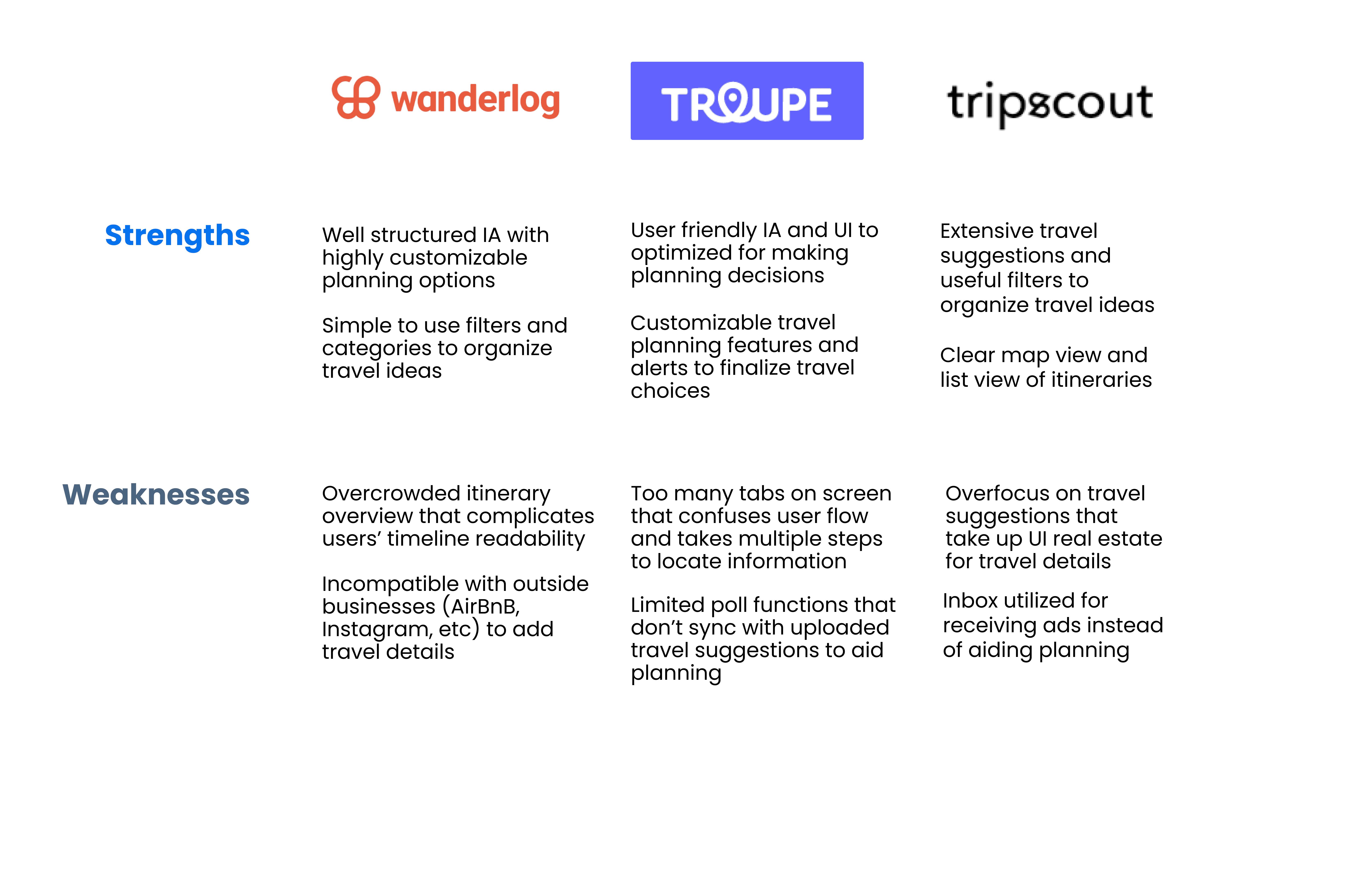
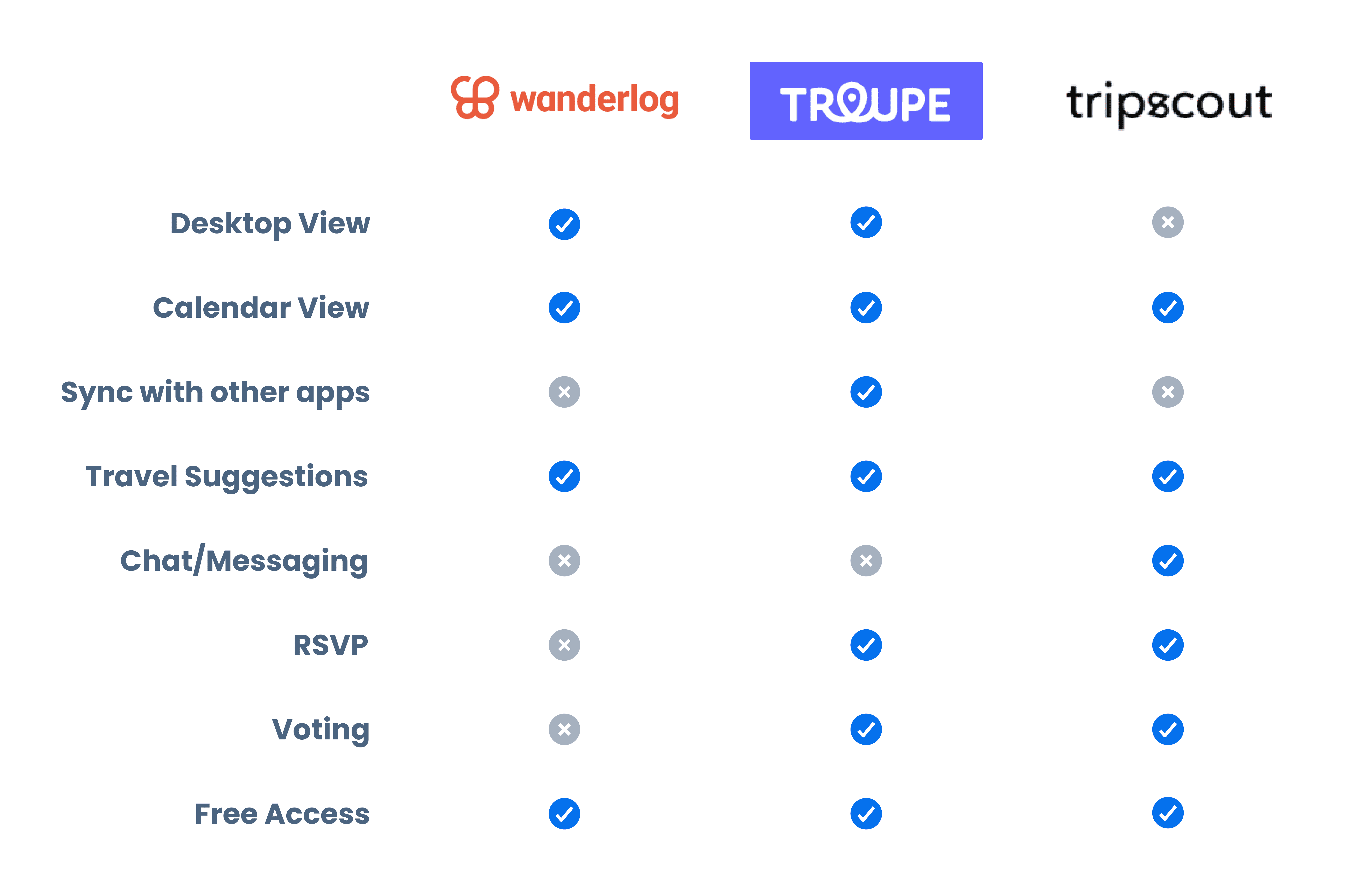
A competitive analysis of travel planning platforms revealed gaps in the market. While useful, these platforms required users to create new accounts and switch between apps, lacking integration with social media where users already share ideas.

A competitive analysis of travel planning platforms revealed gaps in the market. While useful, these platforms required users to create new accounts and switch between apps, lacking integration with social media where users already share ideas.

click to enlarge

User Behaviors and Preferences

User Behaviors and Preferences

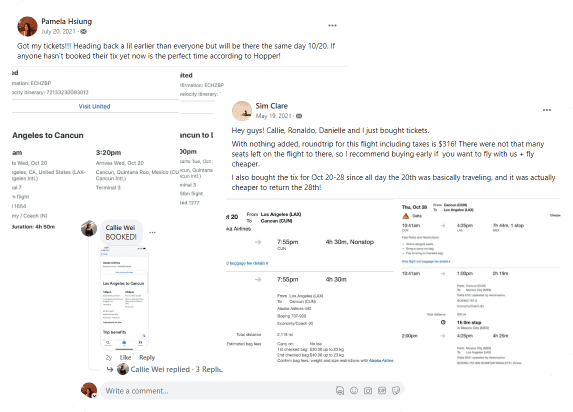
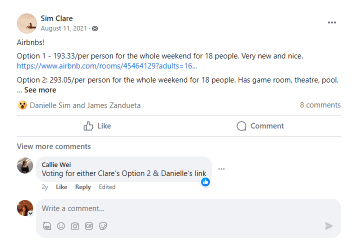
I surveyed 15 users that planned at least one trip with friends within the last 12 months. The results revealed that 3/15 (20%) users utilized a dedicated travel planning app, and all 3/3 users continued to use major social media platforms and organizational services alongside these apps. Since much of the planning process occurred outside these platforms, I started observing behaviors that existed beyond dedicated travel planning services.


Below are insights observed:

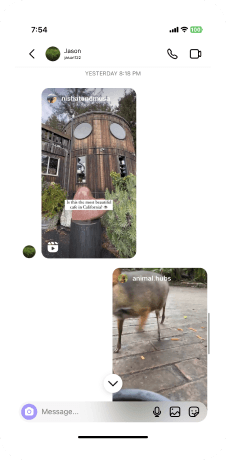
  1. Defaulting to Familiar Platforms

Users prioritize tools already embedded in their social circles, such as:

  • Facebook Messenger, Instagram Direct, and iMessage.

Users prioritize tools already embedded in their social circles, such as:

  • Facebook Messenger, Instagram Direct, and iMessage.

  1. Adapting Existing Features

Despite limitations, users still repurposed existing social media features like:

  • Facebook Events to organize travel plans

  • Comments and links to share travel ideas

Despite limitations, users still repurposed existing social media features like:

  • Facebook Events to organize travel plans

  • Comments and links to share travel ideas

  1. Drawing Inspiration From Social Media
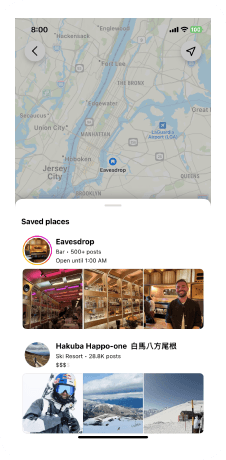
Users also discover and explore ideas through platforms Instagram, TikTok, and Facebook. However, inspiration remains disconnected from the actual planning process, creating inefficiencies.

Users also discover and explore ideas through platforms Instagram, TikTok, and Facebook. However, inspiration remains disconnected from the actual planning process, creating inefficiencies.

click to enlarge

Key Findings

Enhancing an Existing Platform
Research findings highlight a significant opportunity to improve an existing platform rather than creating a new one. Meta stands out as the ideal choice because:

  1. Users Already Use It: Participants rely on Meta’s Messenger and Events features for basic travel planning and collaboration.

  2. No Onboarding Friction: Users avoid the hassle of learning new tools.

  3. Ecosystem Advantage: Meta’s integration with Instagram and partnerships with platforms like Airbnb provide a seamless experience.

Enhancing an Existing Platform
Research findings highlight a significant opportunity to improve an existing platform rather than creating a new one. Meta stands out as the ideal choice because:

  1. Users Already Use It: Participants rely on Meta’s Messenger and Events features for basic travel planning and collaboration.

  2. No Onboarding Friction: Users avoid the hassle of learning new tools.

  3. Ecosystem Advantage: Meta’s integration with Instagram and partnerships with platforms like Airbnb provide a seamless experience.

How Might We

How might we streamline group travel planning by integrating communication, collaboration, and inspiration-sharing into a single, familiar platform, reducing the need for multiple disconnected apps and improving user engagement?

Design Insights and Approach
Enhancing Existing Platforms

Enhancing Existing Platforms

Users are already leveraging Meta’s platforms for travel planning but face limitations due to disconnected workflows and a lack of dedicated tools. By integrating advanced planning features into Meta’s ecosystem, we can:

Users are already leveraging Meta’s platforms for travel planning but face limitations due to disconnected workflows and a lack of dedicated tools. By integrating advanced planning features into Meta’s ecosystem, we can:

Deliver a familiar and user-friendly experience that eliminates the need for additional apps, removing onboarding friction

Deliver a familiar and user-friendly experience that eliminates the need for additional apps, removing onboarding friction

Leverage Meta’s partnerships with other media platforms to bridge inspiration, collaboration, and execution, offering a seamless end-to-end solution.

Leverage Meta’s partnerships with other media platforms to bridge inspiration, collaboration, and execution, offering a seamless end-to-end solution.


Rather than creating a new platform, I focused on improving Meta’s existing tools. Since users already rely on Meta’s ecosystem, including Messenger, Facebook Events, and Instagram, the design aimed to integrate travel planning features into these familiar spaces. This approach minimized friction and allowed for a seamless experience.


Rather than creating a new platform, I focused on improving Meta’s existing tools. Since users already rely on Meta’s ecosystem, including Messenger, Facebook Events, and Instagram, the design aimed to integrate travel planning features into these familiar spaces. This approach minimized friction and allowed for a seamless experience.

Streamline Communication

Streamline Communication

Enable seamless communication within group chats on Messenger.

Enable seamless communication within group chats on Messenger.

Collaborative Tools

Collaborative Tools

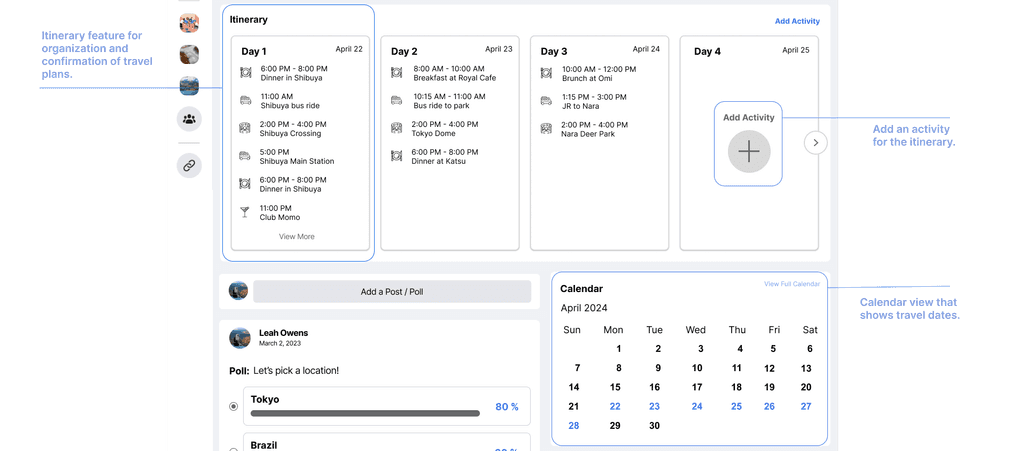
Allow users to collaborate on itineraries, voting for destinations, and activities.

Allow users to collaborate on itineraries, voting for destinations, and activities.

Social Media Integration

Social Media Integration

Bring Instagram and Facebook content into the planning space, allowing for easy sharing of travel inspiration.

Bring Instagram and Facebook content into the planning space, allowing for easy sharing of travel inspiration.

Ideation

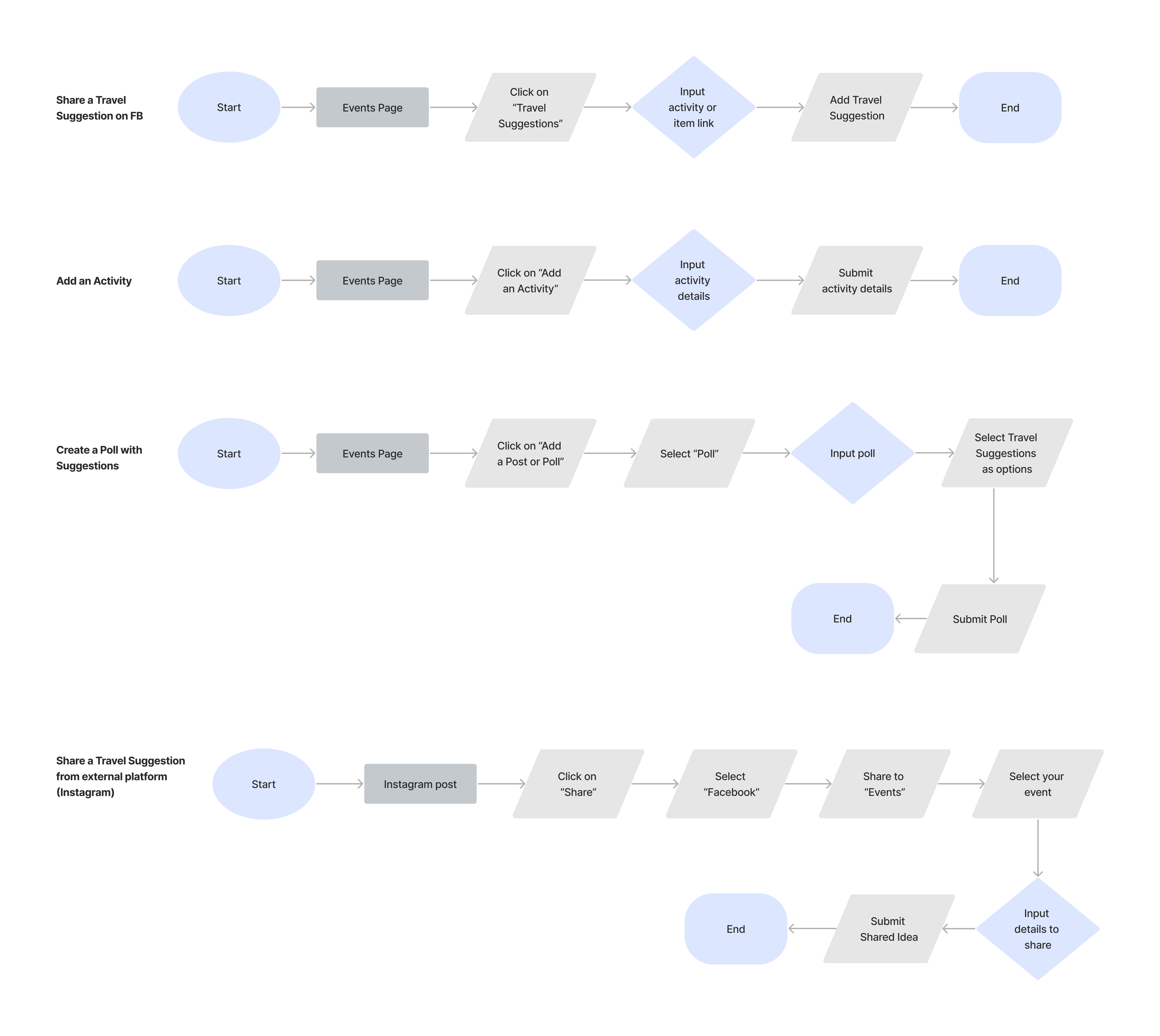
Ideation, flow, and wireframes for design brainstorming

Ideation, flow, and wireframes for design brainstorming

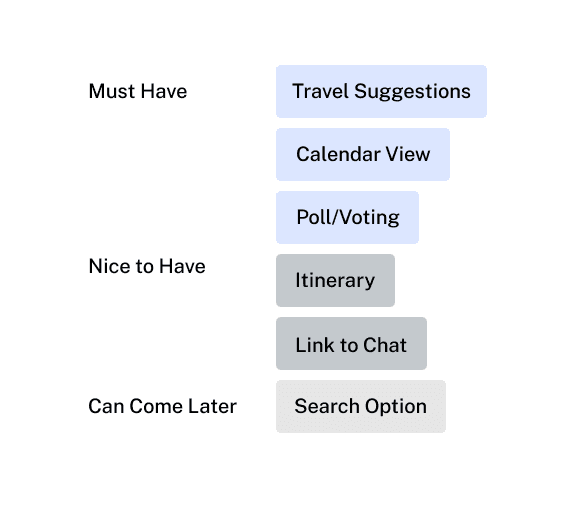
Gleaning in our research and analysis, I prioritized the must-have features of a functioning location service and the essential task flow - to search and arrive at a newly discovered location.

Gleaning in our research and analysis, I prioritized the must-have features of a functioning location service and the essential task flow - to search and arrive at a newly discovered location.

User Testing and Iteration

Initial user testing via mid-fidelity wireframes with 100% task flow completion via user testing. Updates were made prior to hi-fidelity prototyping.

Initial user testing via mid-fidelity wireframes with 100% task flow completion via user testing. Updates were made prior to hi-fidelity prototyping.

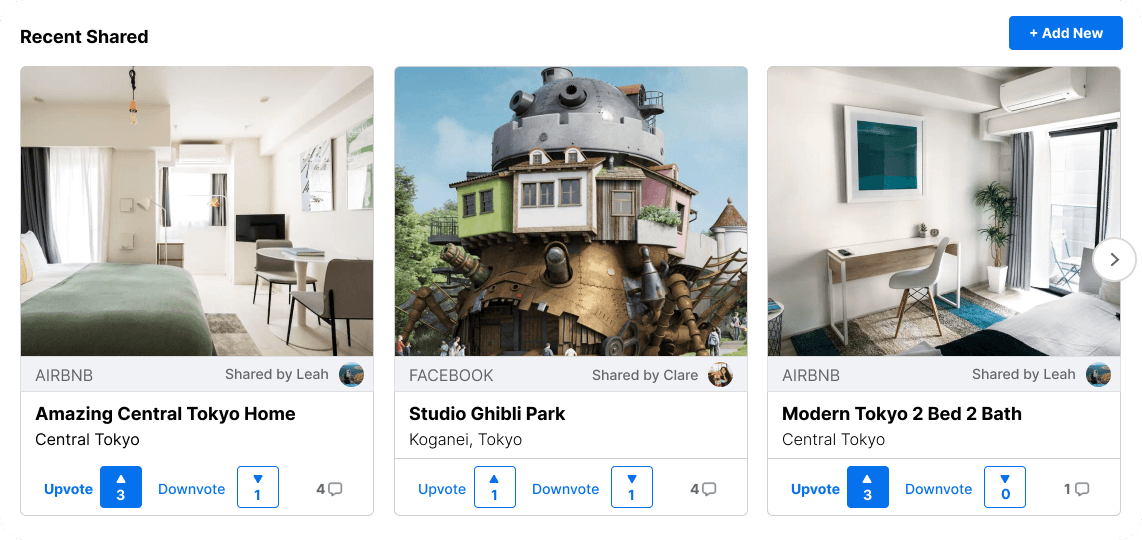
Users had trouble posting new ideas directly from shared page
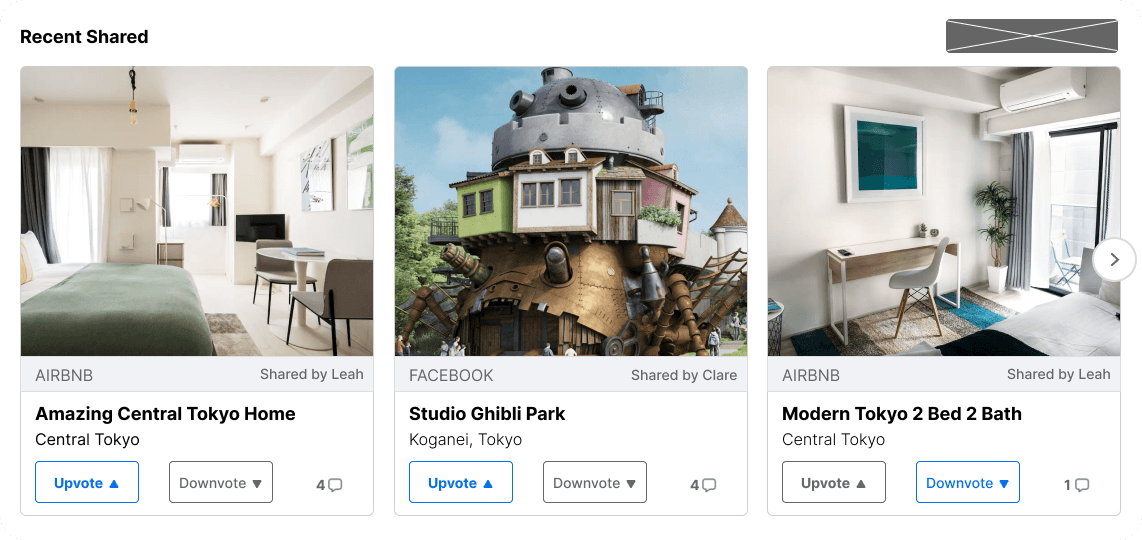
Users looked for indication of number of votes on each post

Users looked for indication of number of votes on each post

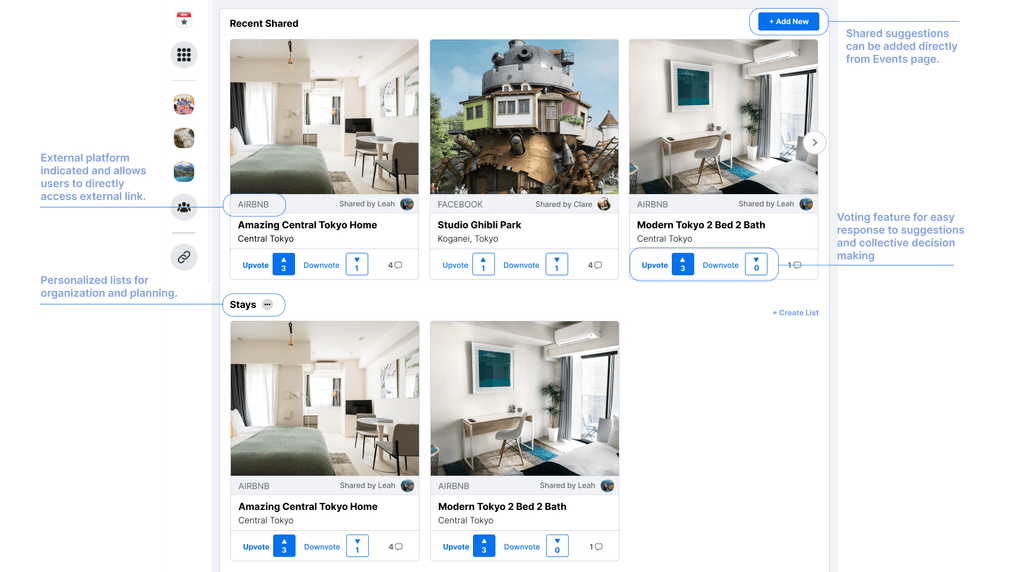
"Add New" created for easy access to CTA

"Add New" created for easy access to CTA

Voting buttons updated to indicate number of votes

Voting buttons updated to indicate number of votes

Design Solution

Getting Started: Share directly from other platforms to Facebook integration i.e. instagram

Travel Inspiration Hub

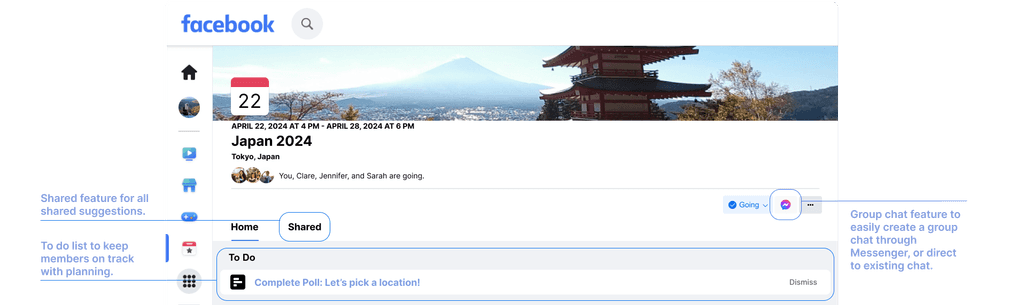
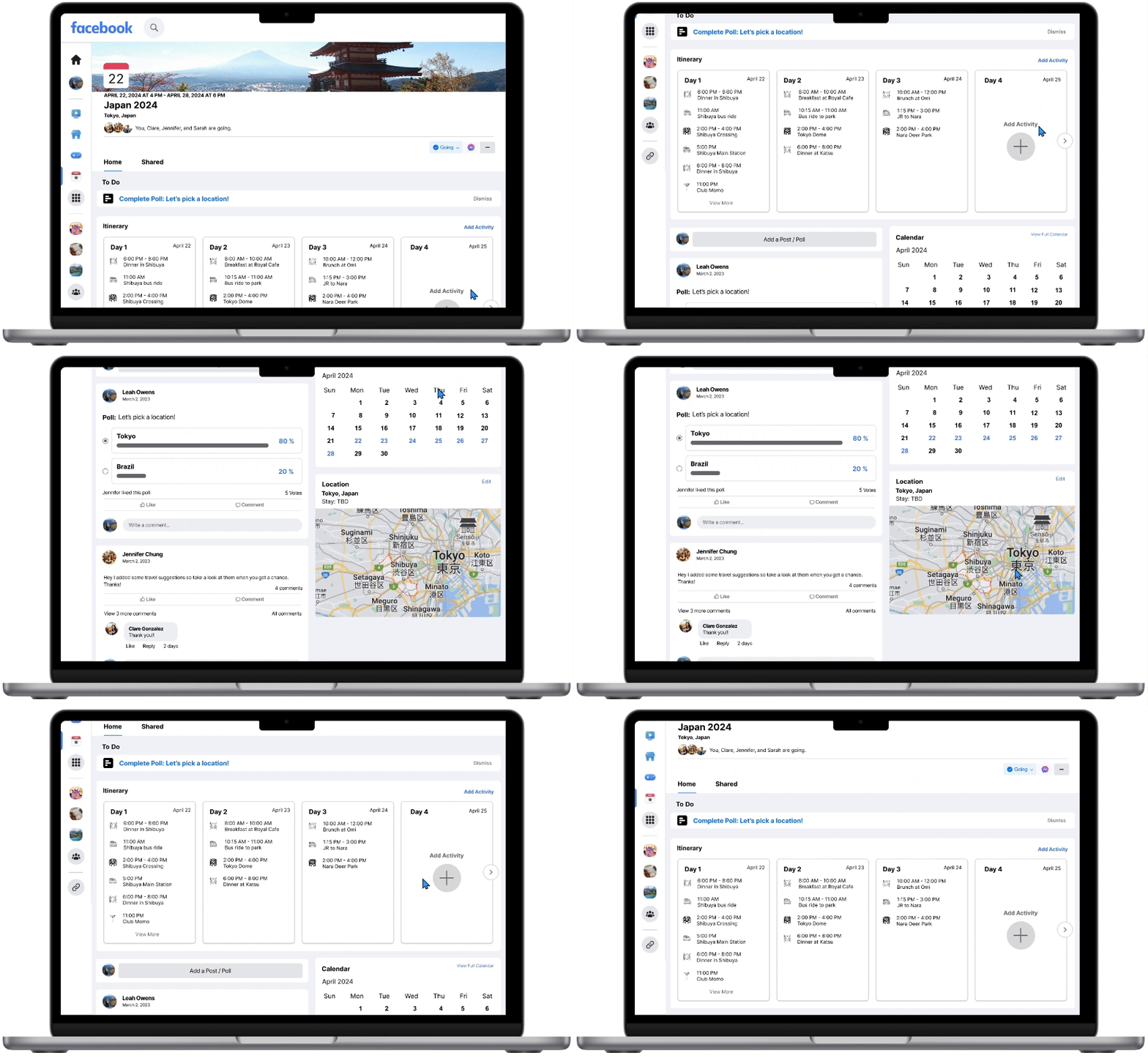
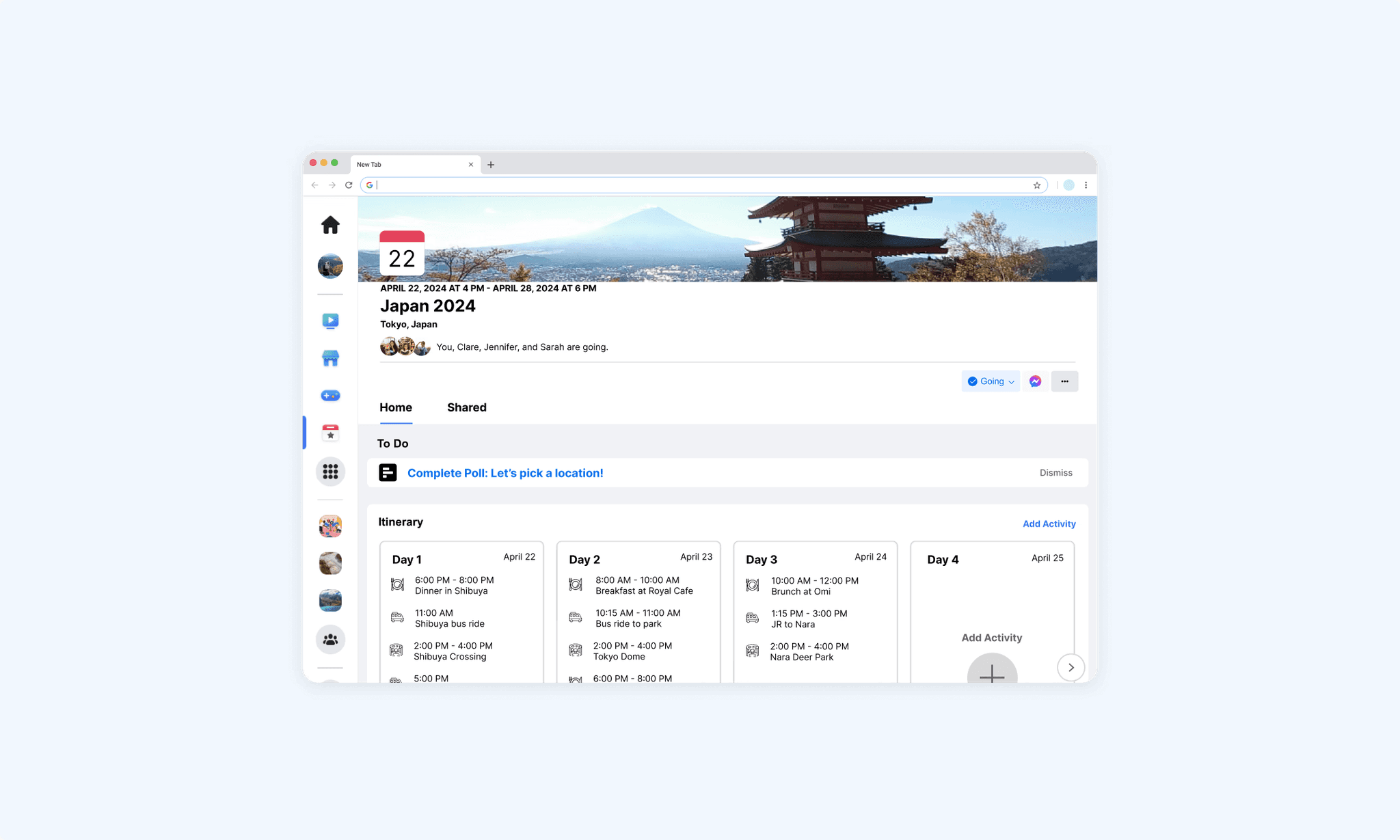
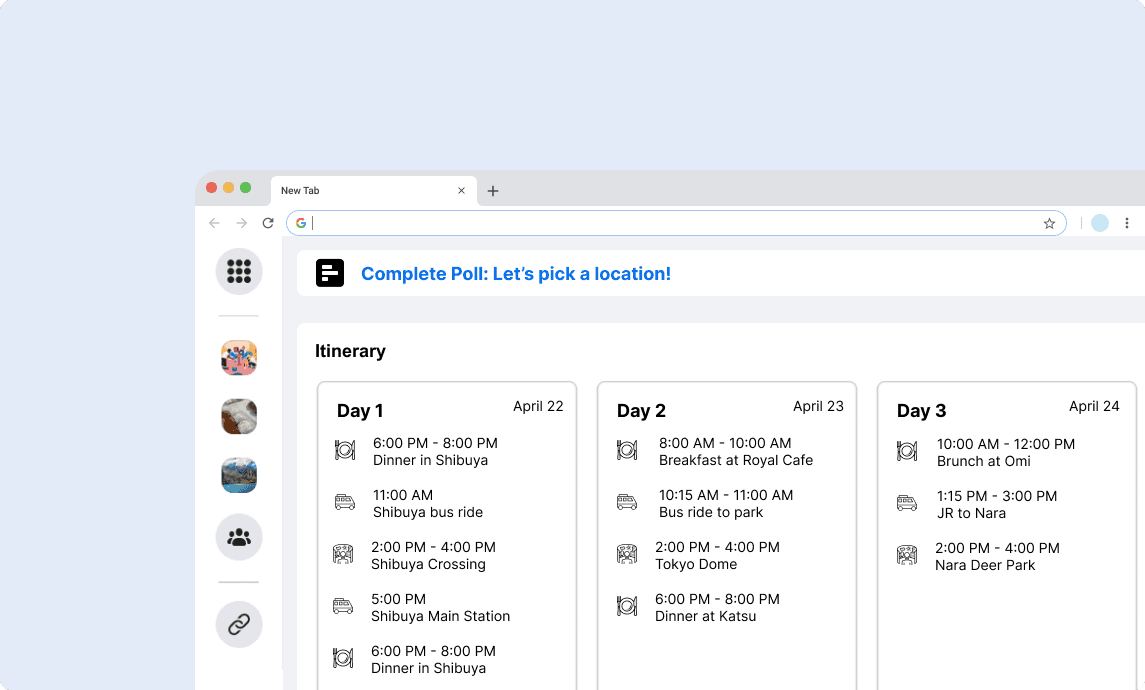
Added itinerary for planning and organization, calendar, to do list, and link to messenger.

Added itinerary for planning and organization, calendar, to do list, and link to messenger.

Enhanced Facebook Events with Itinerary
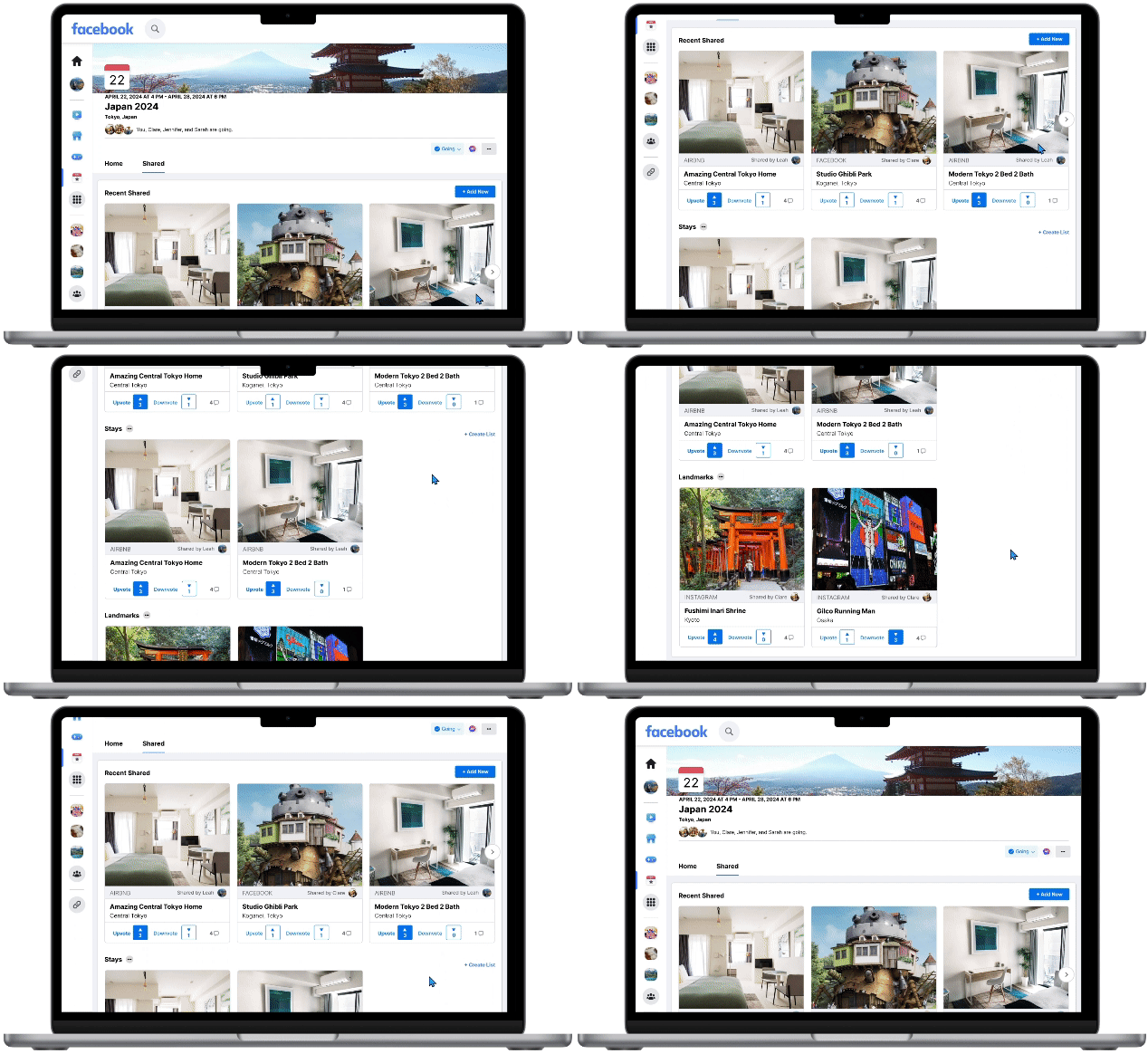
Consolidated page to share travel ideas and engage in planning.

Consolidated page to share travel ideas and engage in planning.

Impact

Impact

By integrating these features into Meta’s ecosystem, we simplified the travel planning process. Users no longer had to switch between different apps or platforms, reducing confusion and improving collaboration. This seamless integration within a familiar platform led to a more efficient and enjoyable planning experience.

By integrating these features into Meta’s ecosystem, we simplified the travel planning process. Users no longer had to switch between different apps or platforms, reducing confusion and improving collaboration. This seamless integration within a familiar platform led to a more efficient and enjoyable planning experience.

Future Considerations

Peripheral Behaviors Unveil Opportunities

By observing users' peripheral behaviors, we can discover unmet needs within well established platforms. Many well established business overlook peripheral actions that have hidden opportunities to explore.


Prioritizing User Needs

Given the short timeline, prioritization was crucial and focusing on user needs helped me target the main problem. This allowed me to focus on creating features that were less obvious but more meaningful.


Platform Selection and Expansion

Choosing Meta was strategic, as users were already improvising solutions for their needs on the platform. In the future, expanding to Instagram or other major platforms could be explored for further enhancements.


Further Development and Enhancements

Given more time, I would like to expand the solution to incorporate more partnership with other travel services that users rely on, such as flight agencies and accommodations.

© Pamela Hsiung 2025