Seenic

The search process for scenic views is long and tedious. Seenic emerged as a solution something something. End to end mobile design.

The search process for scenic views is long and tedious. Seenic emerged as a solution something something. End to end mobile design.

view final prototype

view final prototype

Role

Role

UI / UX designer

and researcher

UI / UX designer

and researcher

Timeline

Timeline

4 weeks

4 weeks

Tools

Tools

Figma

Photoshop

Miro

Figma

Photoshop

Miro

While popular travel destinations and well-known landscapes are relatively easy to find, it is difficult to search and locate off-the-beaten-path scenic views.

Seenic emerged from the desire to simplify this process and offer users a seamless experience in discovering new and lesser-known scenic views.

Seenic emerged from the desire to simplify this process and offer users a seamless experience in discovering new and lesser-known scenic views.

How might we help eager users easily discover new and lesser known scenic views? 

How might we help eager users easily discover new and lesser known scenic views? 

Current search experience filled with friction and frustration.

Current search experience filled with friction and frustration.

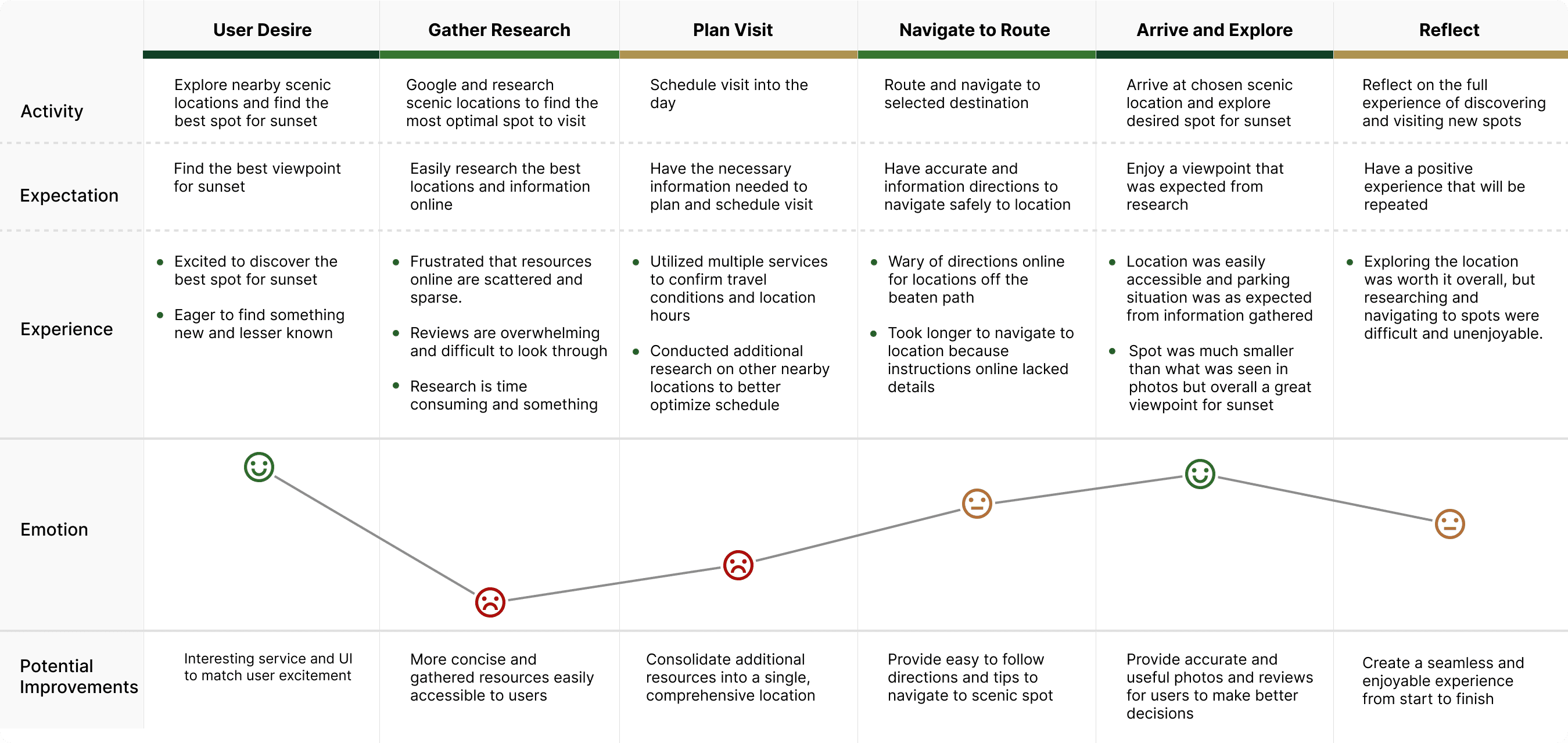
Users utilize search engines (e.g. Google) to search for locations, but the experience is riddled with friction and frustration. The gaps within the experience reveal major improvements for building our service. Users begin searches with enthusiasm and end frustrated with mediocre results.

user journey map
solution brief
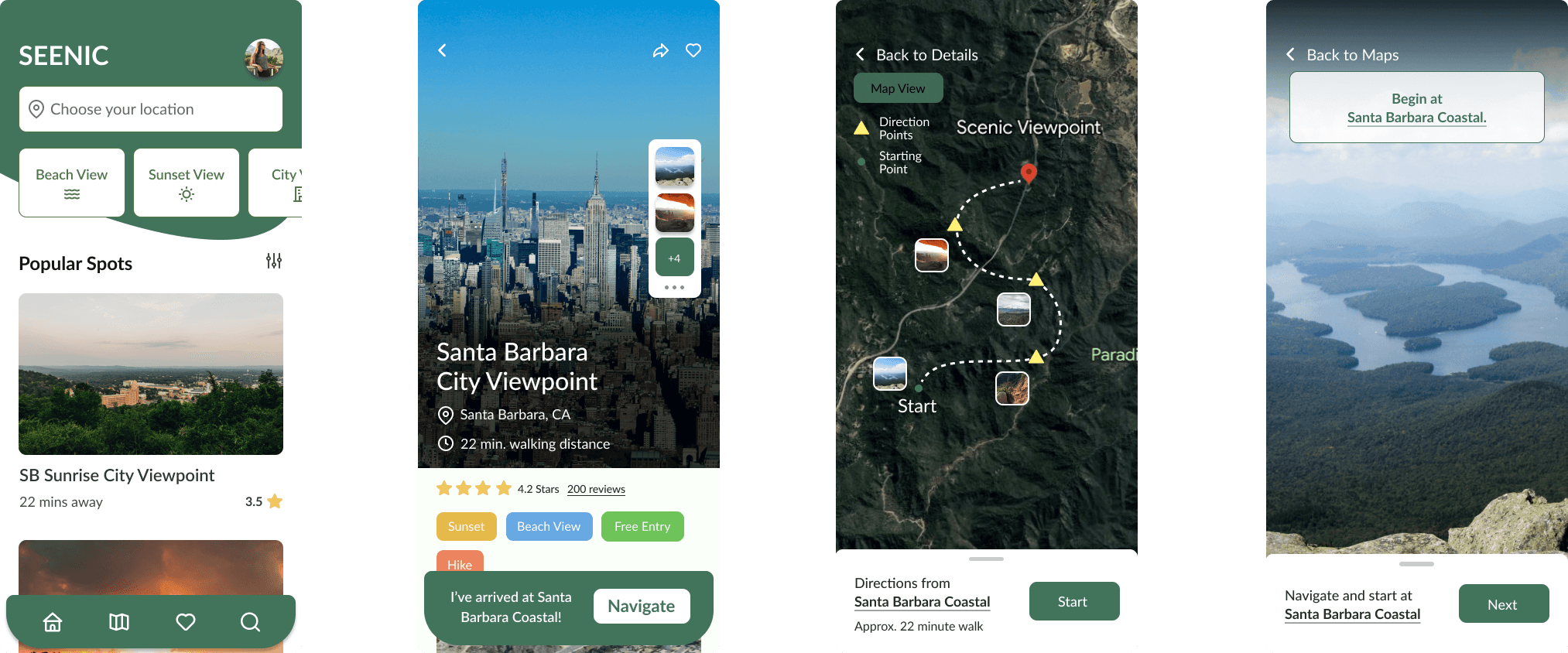
A one stop platform that consolidates and organizes information online for easy user access.

A one stop platform that consolidates and organizes information online for easy user access.

Insights through user conversations

Insights through user conversations

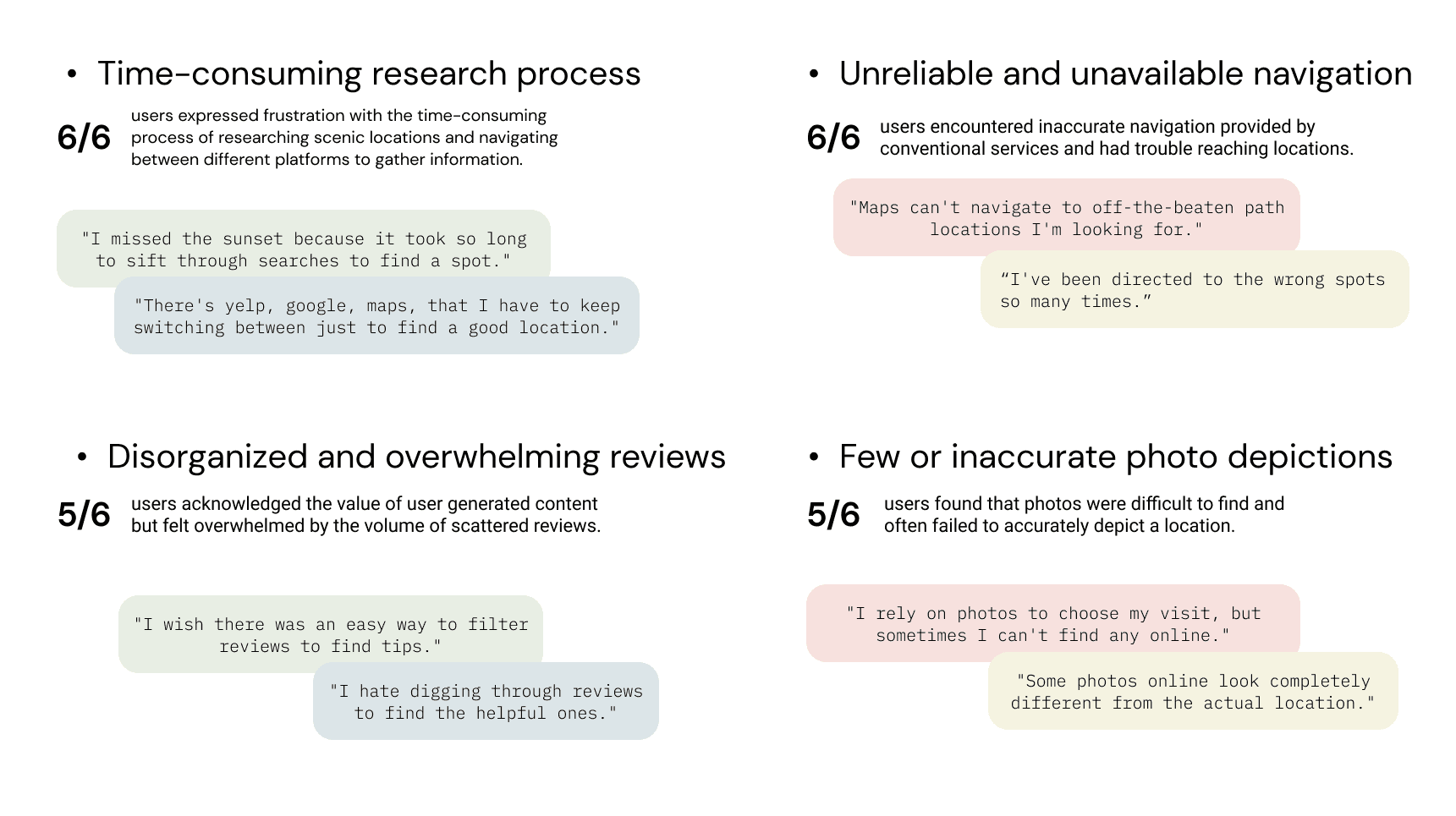
I conducted 6 interviews with users that have researched and visited at least 1 new scenic location within 12 months, revealing 4 major components of improvements.
01
Time-consuming research process

01
Time-consuming research process

5/6 users found that photos were difficult to find and often failed to accurately depict a location.

Current market lacked a comprehensive platform to support discovery from start to finish.

Current market lacked a comprehensive platform to support discovery from start to finish.

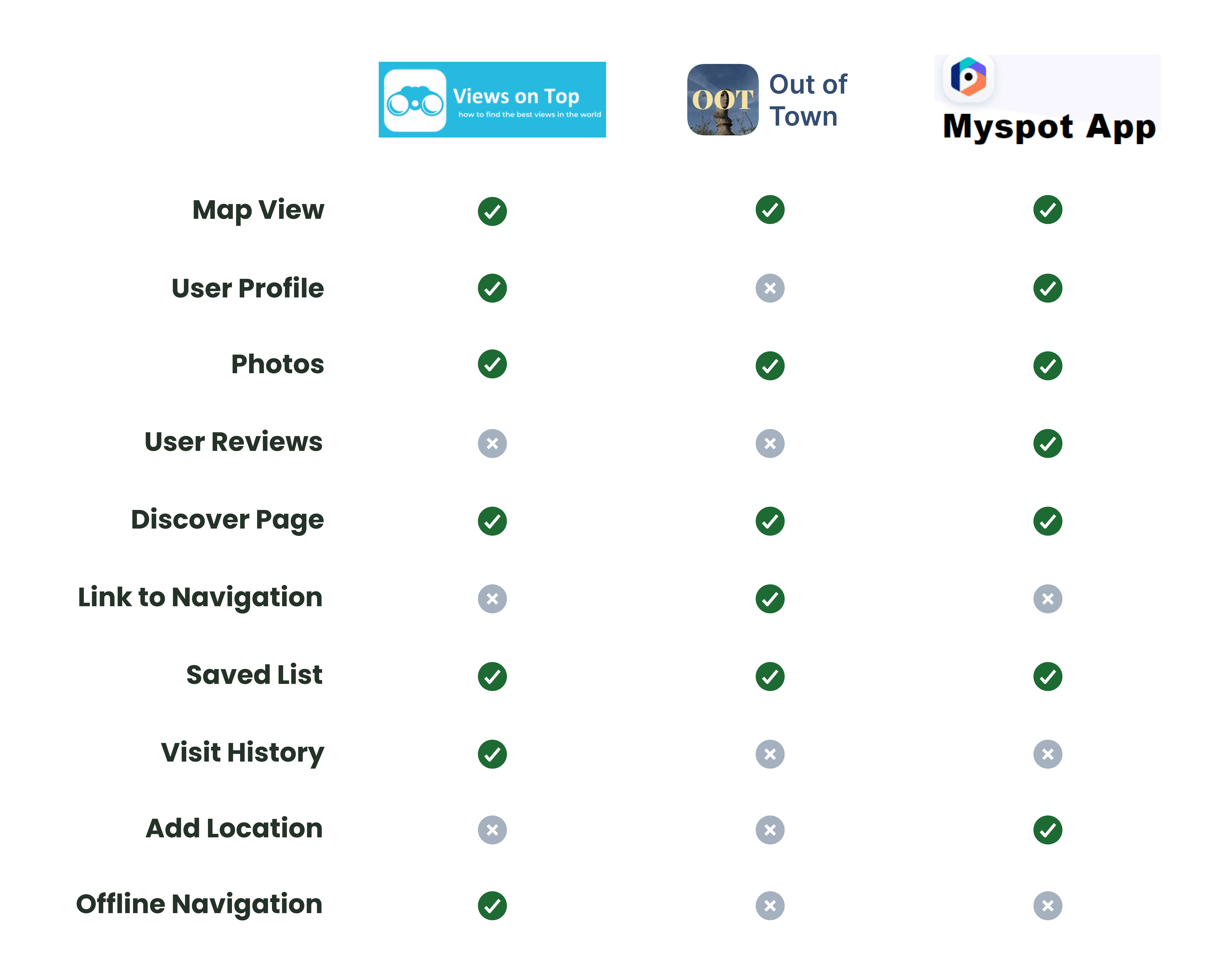
I analyzing the current landscape that revealed gaps within current services. However, each existing service possessed unique strengths and must-have features to adopt.

competitive analysis
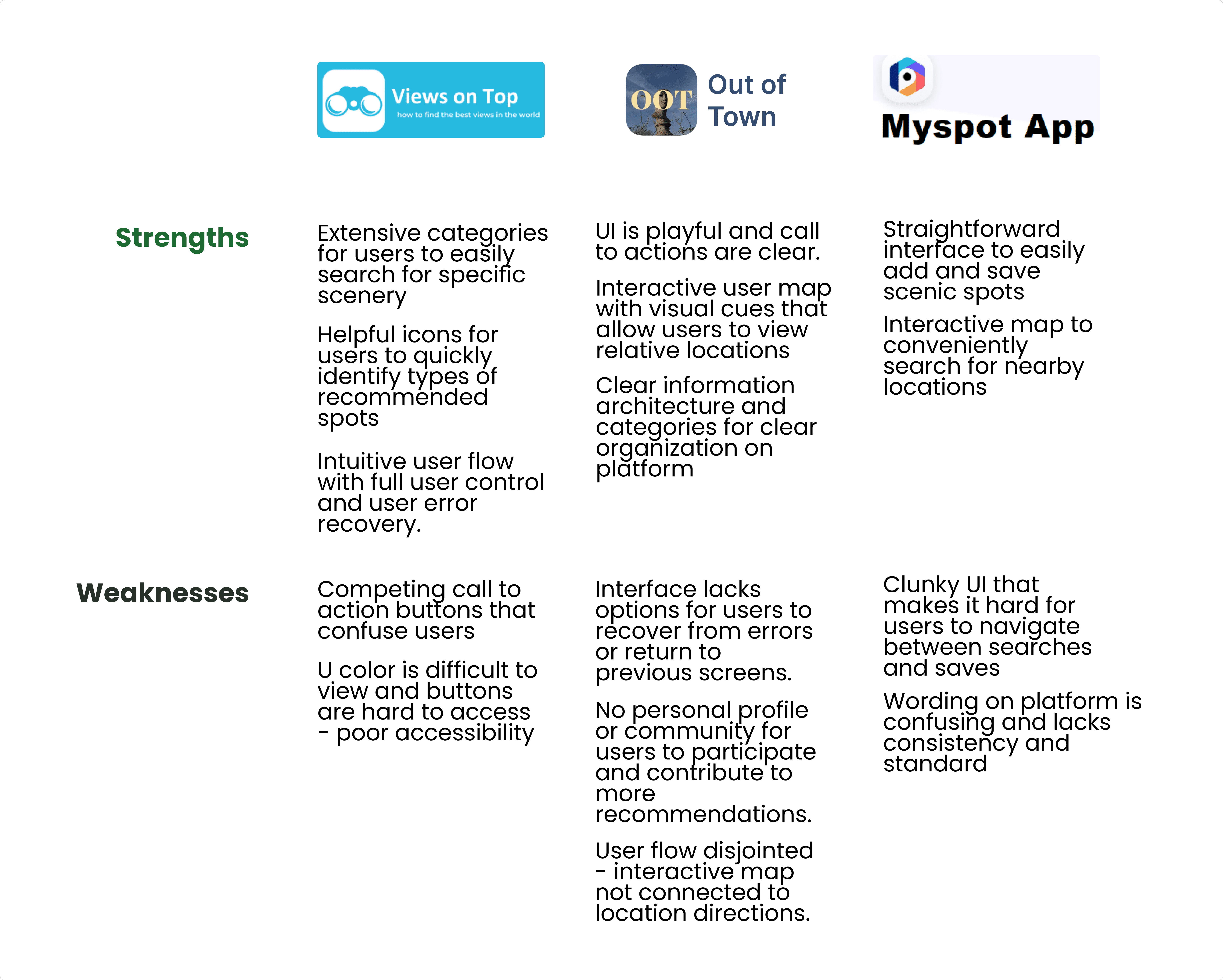
feature matrix
Focusing on the target audience.

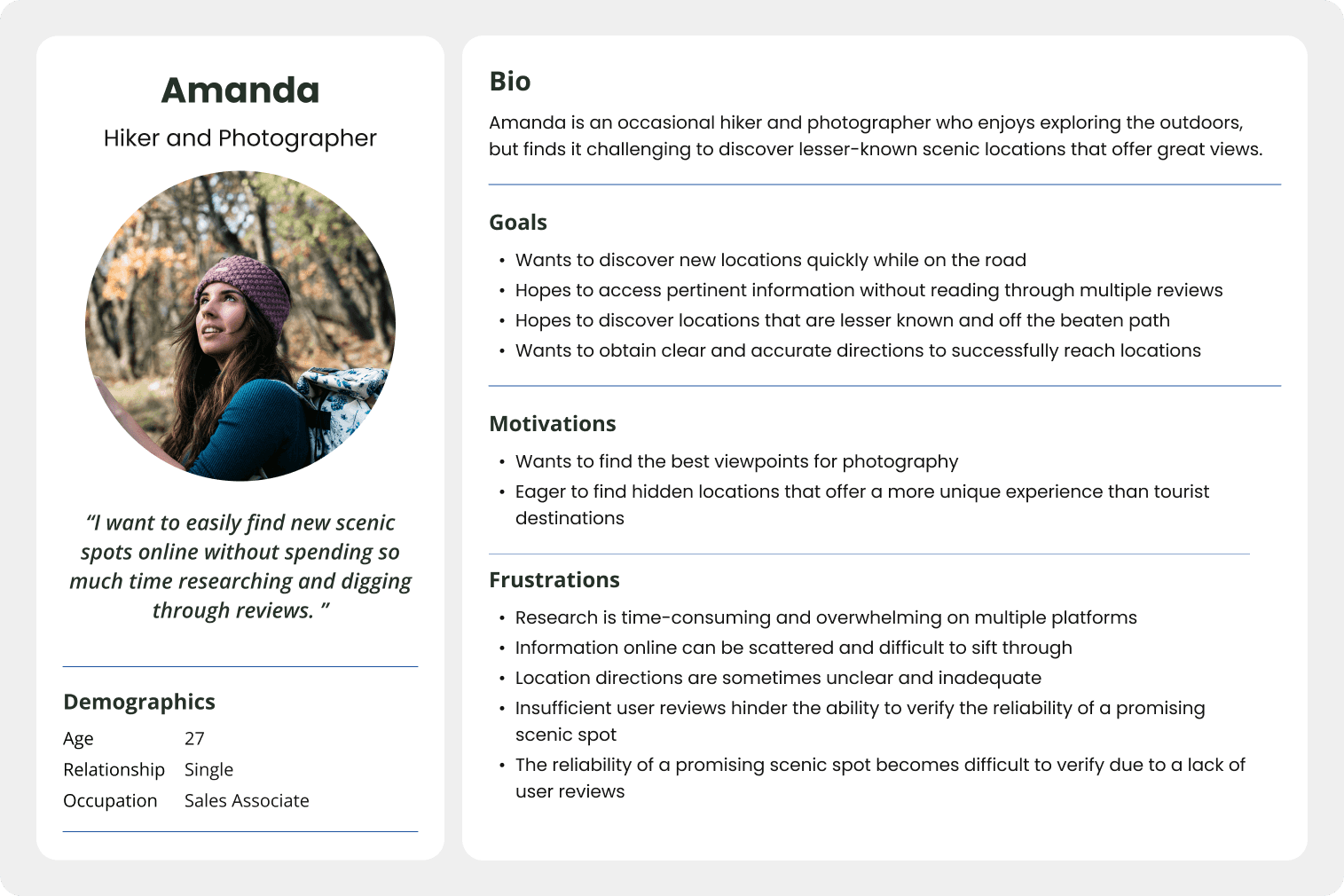
Focusing on the target audience.

Through interviews and research, a user persona was developed to encapsulate a collective experience, encompassing the frustrations and motivations of all users.

user persona
Ideation, flow, and wireframes for design brainstorming

Ideation, flow, and wireframes for design brainstorming

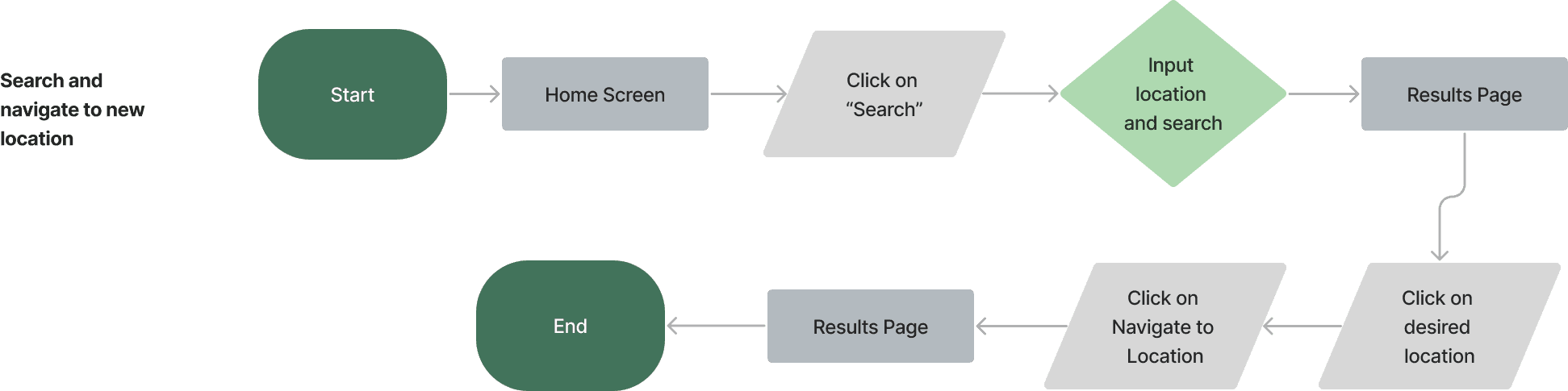
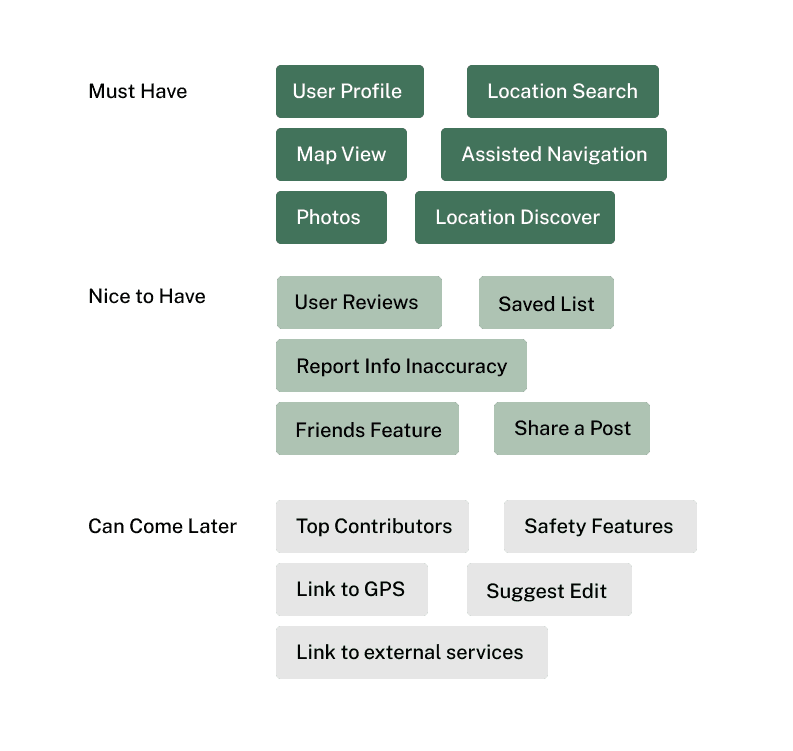
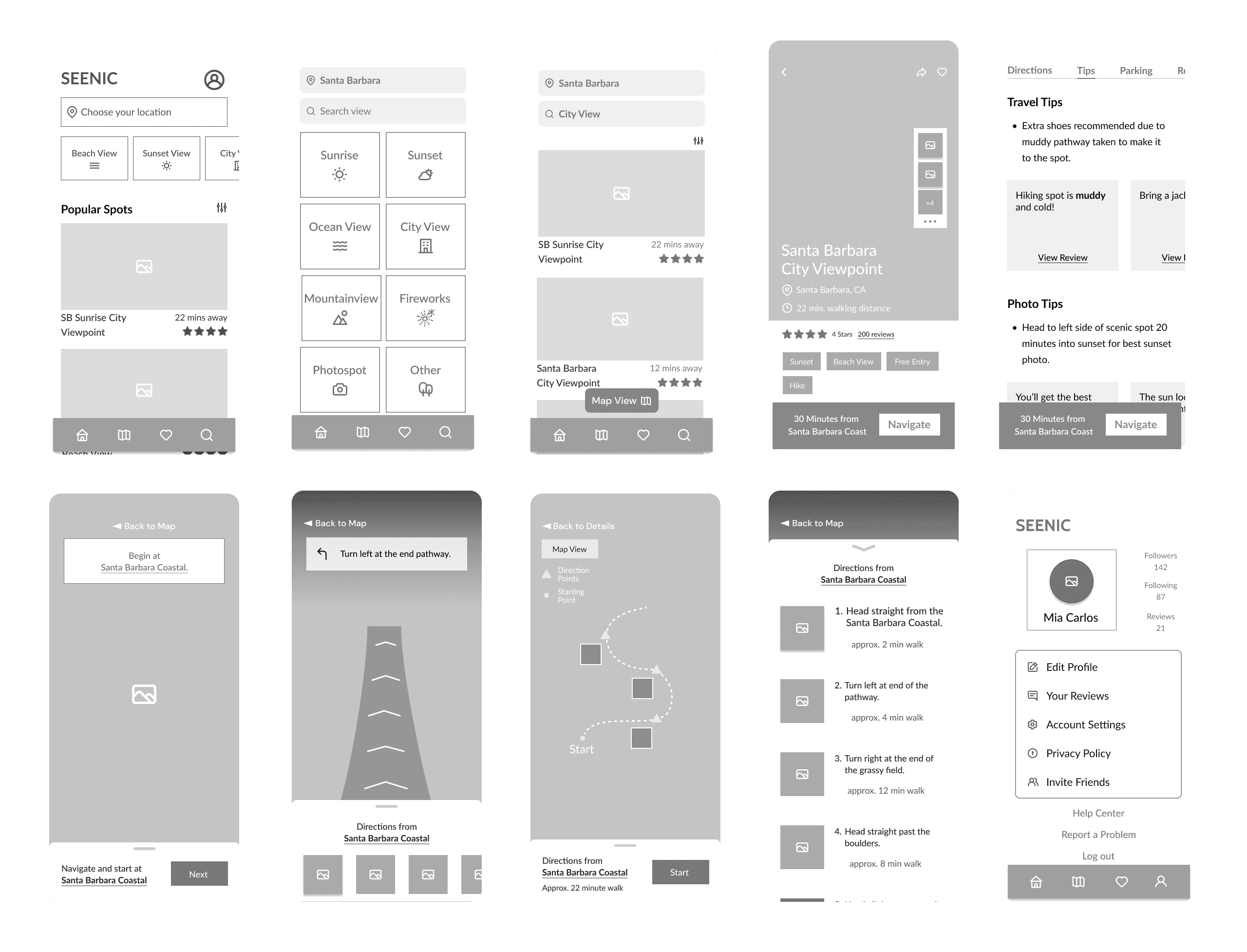
Through interviews and competitive analysis, I prioritized the must-have features of a functioning location service and the essential task flow - to search and arrive at a newly discovered location.

priority matrix
task flow

wireframes
Iterations and additions through user feedback.

Iterations and additions through user feedback.

User testing conducted with 5 users on mid-fidelity prototypes with 100% task flow completion rate.
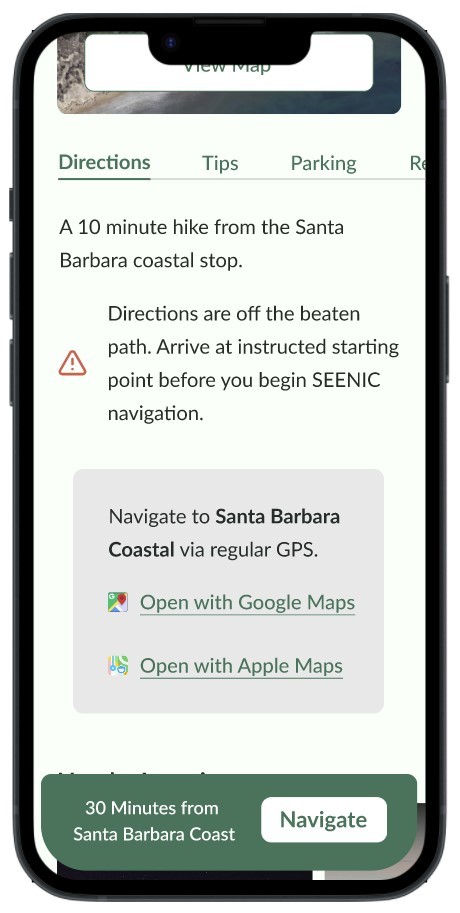
3/5 users requested clearer indication that directions are for offline navigation.

3/5 users requested clearer indication that directions are for offline navigation.

3/5 users requested clearer indication that directions are for offline navigation.

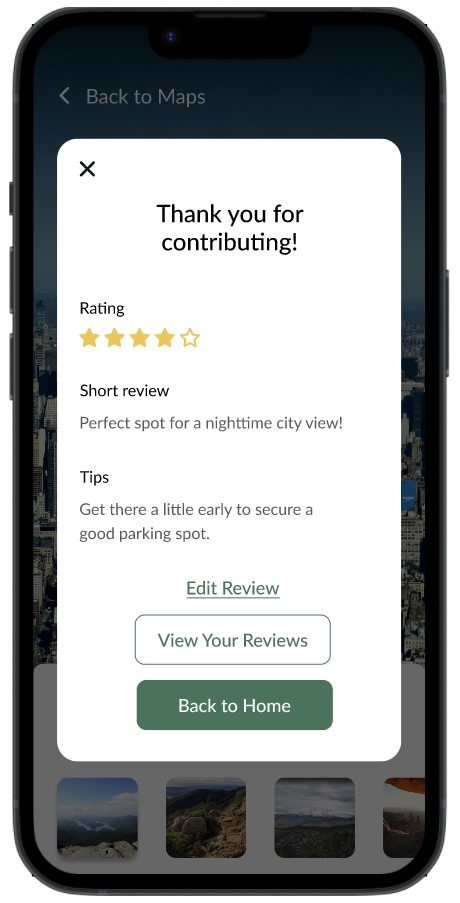
4/5 users wanted the option to leave review after visiting a location

4/5 users wanted the option to leave review after visiting a location

4/5 users wanted the option to leave review after visiting a location

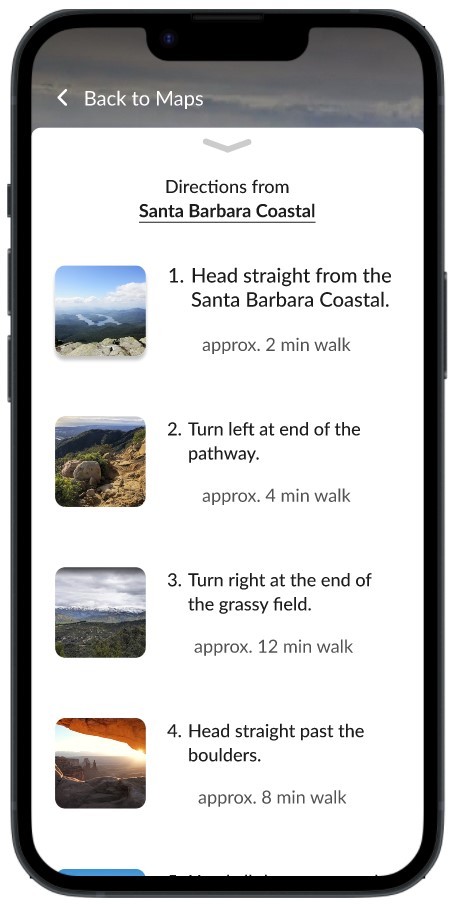
3/5 users wanted an approximate duration of each direction

3/5 users wanted an approximate duration of each direction

3/5 users wanted an approximate duration of each direction

A look at the final Hi-Fidelity Designs

A look at the final Hi-Fidelity Designs

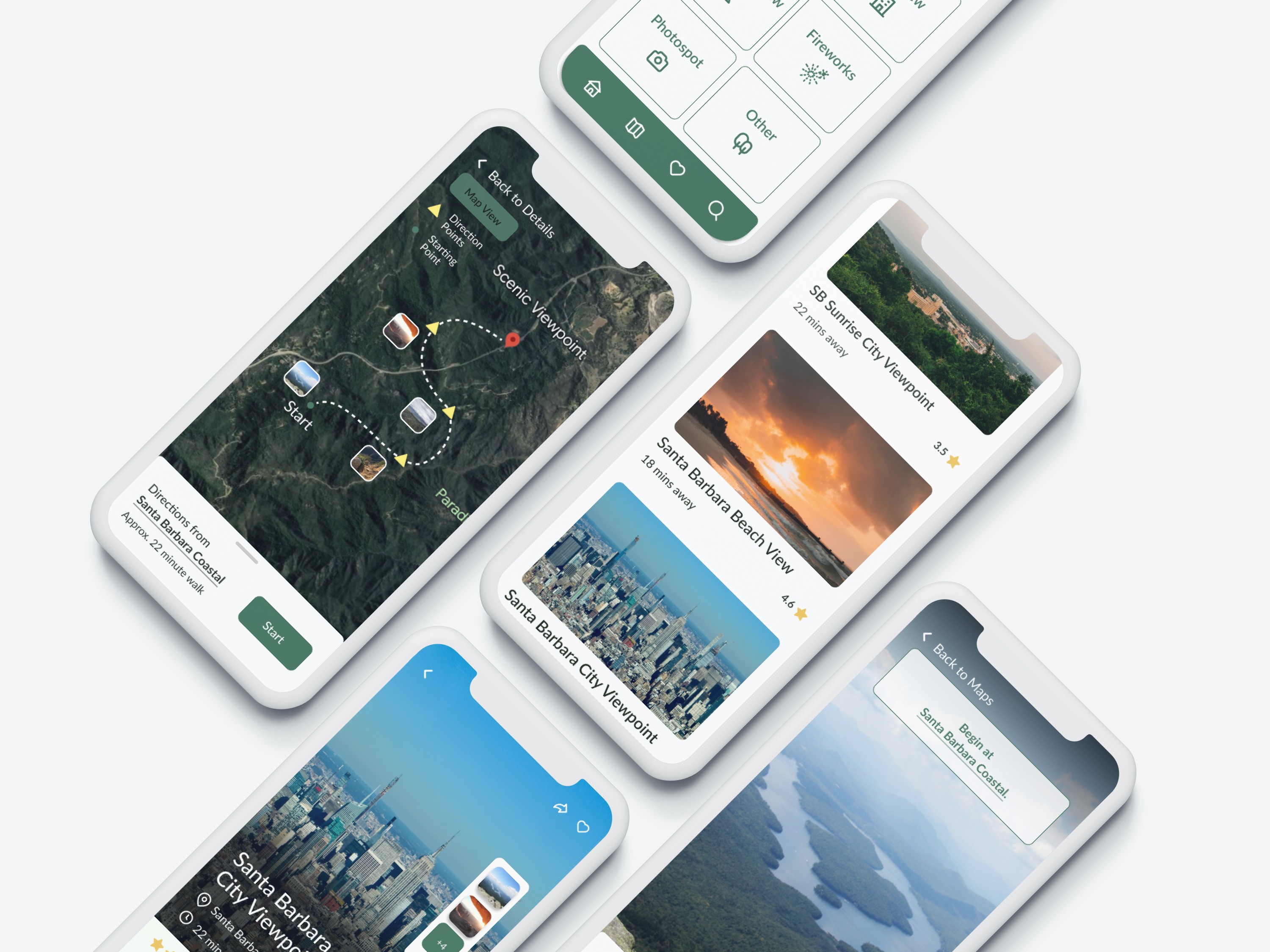
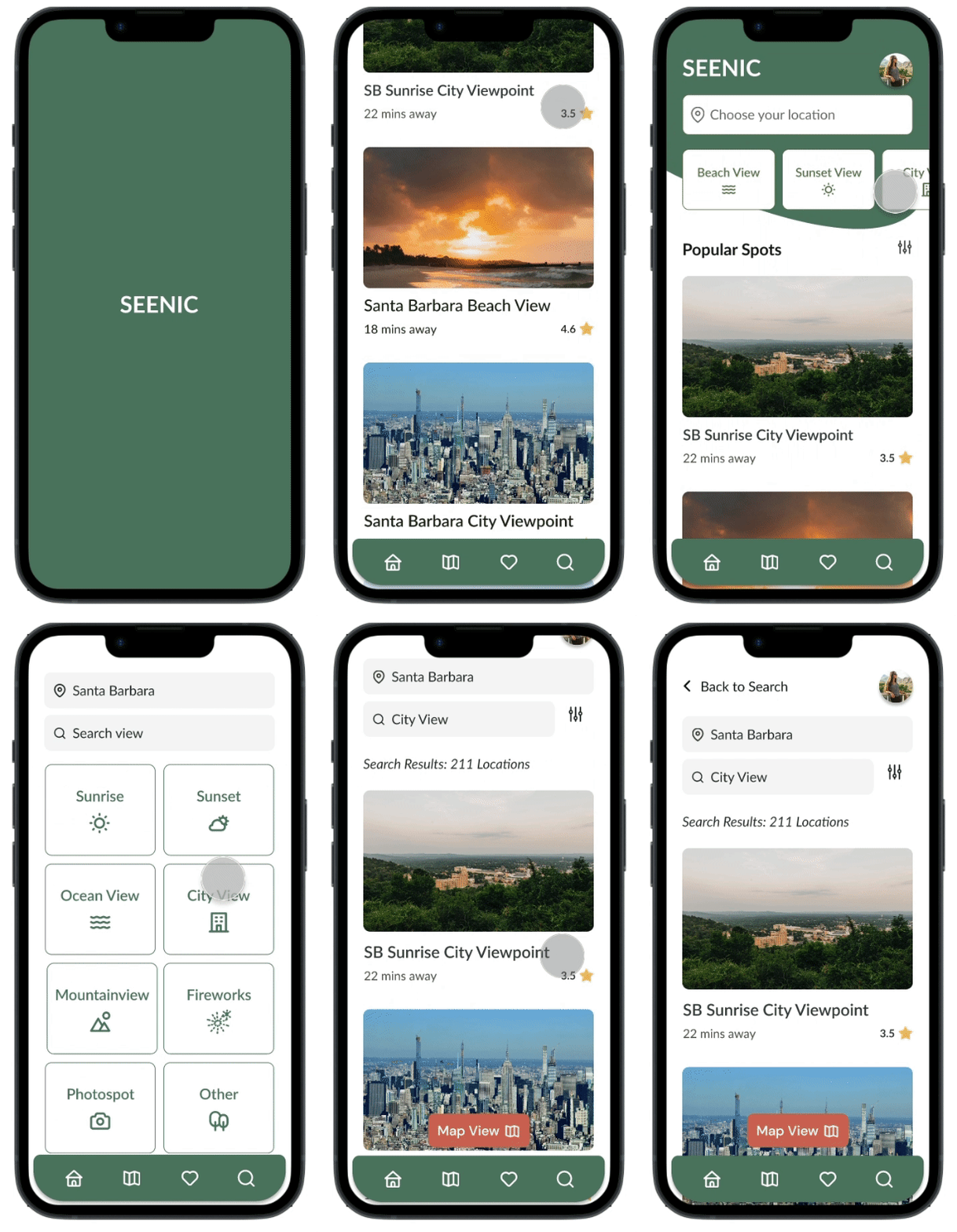
Features through prototypes are shown to solve the major user pain points.
Solved 1: Disorganized and scattered location results

Solved #1: Streamlined Research and Discovery Process

Solved 1: Disorganized and scattered location results

Solved 1: Disorganized and scattered location results

Categories and consolidation allow users to easily search and explore specific scenic locations

Categories and consolidation allow users to easily search and explore specific scenic locations

Categories and consolidation allow users to easily search and explore specific scenic locations

Solved 2: Difficulty searching and parsing through important reviews

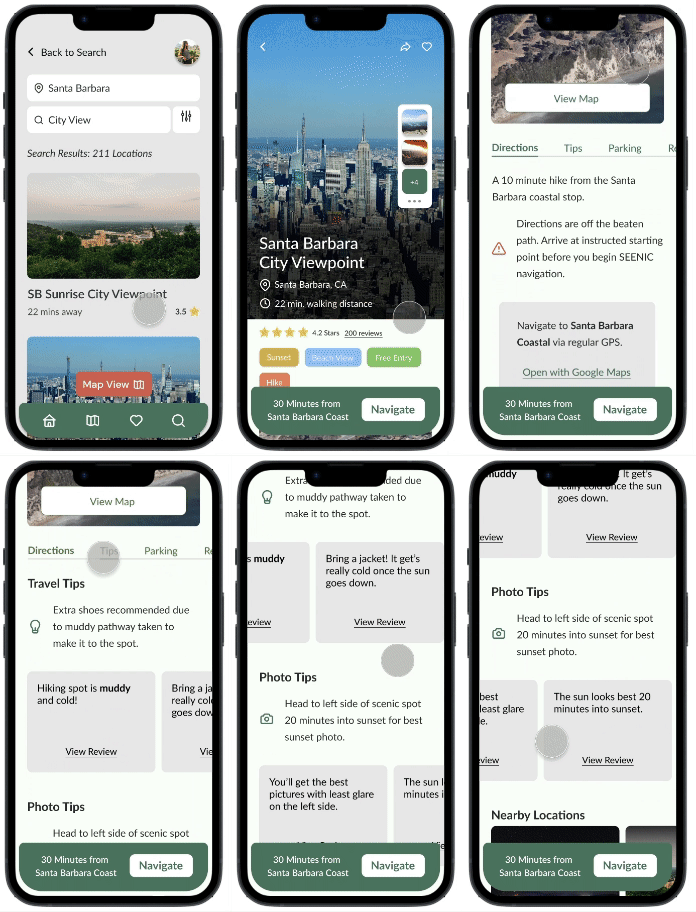
Solved #2: Organized Review and Social Content

Tips and tricks highlighted under Reviews for easy access

Solved 3: Lack of accurate navigation for off- the-beaten path locations

Solved #3: Enhanced Navigational Support

Visual navigation allow users to access directions unavailable through conventional GPS

takeaways

SEENIC was a direct response to a travel challenge I faced. Given the brief 4-week timeline, I focused on establishing essential functionalities to kickstart the concept.

With additional time, my aim is to enhance the Discovery UI for a visually inspiring interface, delve into advanced AR services, and develop more offline navigational tools for improved directional support. Future plans involve crafting enhanced visual reviews through a community-driven platform.

© 2024 Pamela Hsiung